
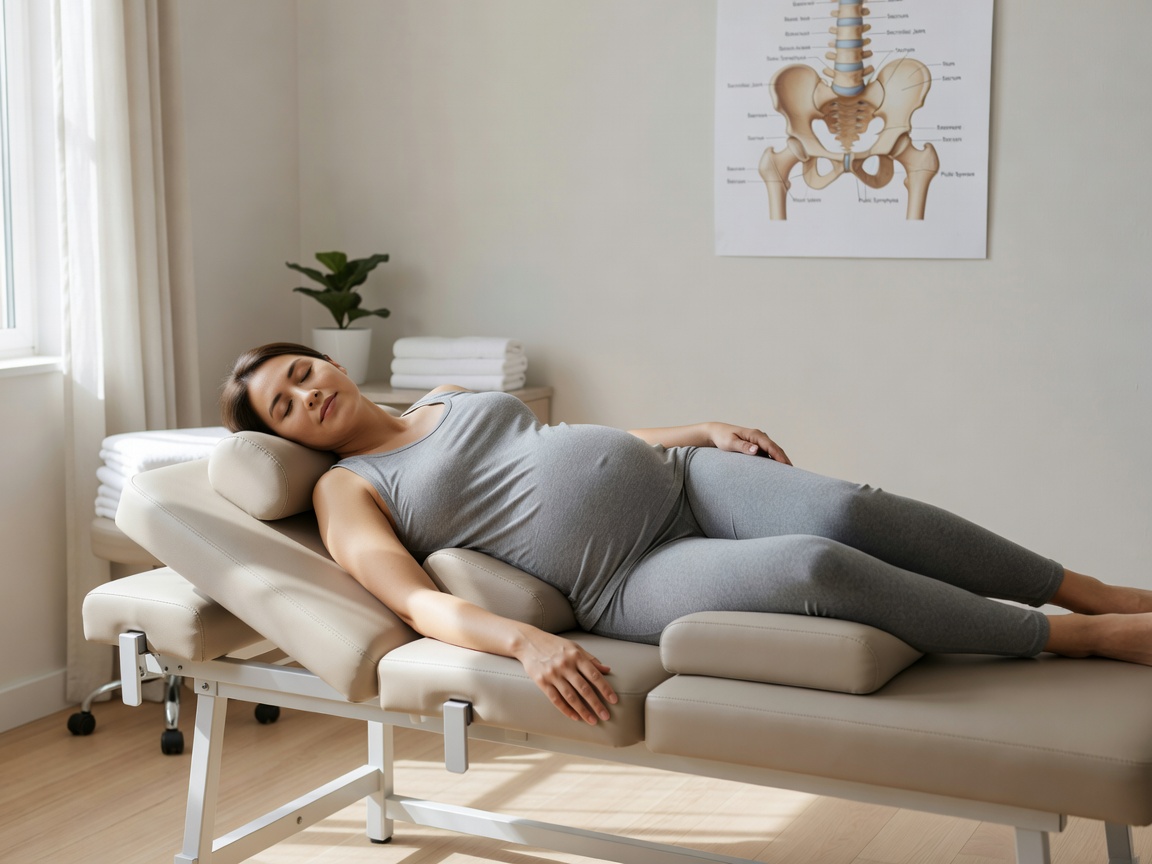
Understanding SI Joint & Pelvic Girdle Pain in Late Pregnancy
Relieving SI joint & pelvic girdle pain in late pregnancy requires a comprehensive, non-pharmacological strategy focused on restoring pelvic stability and balance. A 5-step clinical blueprint includes gentle prenatal manual adjustments to align the pelvic ring, targeted stabilizing exercises (such as cat-cows and core bracing), external support belts, symmetric daily ergonomics, and active labor preparation to reduce joint strain.
The pelvis functions as a closed dynamic ring made up of three main joints: the pubic symphysis at the front and two sacroiliac (SI) joints at the back. Under normal circumstances, this structure transfers weight smoothly from your upper body down through your legs via balanced form closure (the interlocking shape of the bones) and force closure (the dynamic support from muscles and ligaments).
During the third trimester, your growing baby shifts your center of gravity forward, increasing anterior pelvic tilt and placing added shear stress across the pelvic ring. When the joints experience uneven mechanical load or excessive relaxation (symphysiolysis), deep discomfort can emerge.
Clinical evaluations rely on physical provocation tests rather than unnecessary imaging to pinpoint the exact source of irritation. Providers use validated tools such as Patrick's FABER test, the Posterior Pelvic Pain Provocation (P4) test, and the Active Straight Leg Raise (ASLR) test to evaluate joint stability and pain distribution. Scientific research on sacroiliac joint and pelvic dysfunction shows that up to 89% of pregnant women with back discomfort have pain localized directly to the sacroiliac joint rather than standard spinal disc issues.
Distinguishing SI Joint & Pelvic Girdle Pain in Late Pregnancy from Sciatica and Lumbar Issues
Many expectant mothers worry that any sharp pain in their hip or buttock is sciatica. However, true nerve compression is far less common in pregnancy than mechanical joint strain.
- Lumbar back pain: Often presents as a broad, dull ache across the lower back muscles, influenced by increased lumbar lordosis. Addressing general pregnancy related back pain typically involves posture adjustments and gentle core support.
- Sciatica: Involves direct compression of the sciatic nerve, creating sharp, electric, shooting pain that travels past the knee into the calf and foot. True sciatica in pregnancy is often accompanied by tingling or numbness.
- SI Joint Dysfunction / PGP: Tends to be localized between the posterior iliac crest and the gluteal fold, often radiating only to the upper buttock or posterior thigh. It is frequently accompanied by localized tenderness over the long dorsal sacroiliac ligament.
- Round Ligament Pain: Characterized by sudden, jabbing spasms in the lower abdomen or groin triggered by laughing, coughing, or rolling over, as detailed in our guide to round ligament pain.
Hormonal and Biomechanical Triggers Behind Late-Stage Pelvic Instability
Hormones such as relaxin and estrogen naturally surge during pregnancy to increase ligament laxity, preparing the birth canal for labor. However, research highlights that high hormone levels alone do not cause severe pain. Instead, asymmetric joint laxity—where one sacroiliac joint relaxes or moves differently than the other—creates uneven force distribution. Women with asymmetric SI joint laxity face a three-fold higher risk of experiencing moderate to severe pelvic girdle pain compared to those with symmetric motion.
This mechanical imbalance can cause minor rotational malalignments (such as counternutation of the sacrum) and place tension on the uterosacral and sacrotuberous ligaments. Scientific research on osteopathic management of SI joint pain demonstrates that addressing these structural strains with hands-on balancing techniques provides meaningful functional relief. In late gestation, fetal positioning—particularly when baby rests in a posterior occiput position—can also add direct mechanical pressure against the maternal sacrum, amplifying local joint tenderness.
The 5-Step Clinical Blueprint to Relieve Pelvic Instability

Because medications like NSAIDs are contraindicated during pregnancy due to fetal risks, conservative and non-pharmacological care serves as the gold standard for restoring pelvic comfort and stability.
Steps 1 to 3: Manual Realignment, Gentle Exercises, and Support Belts
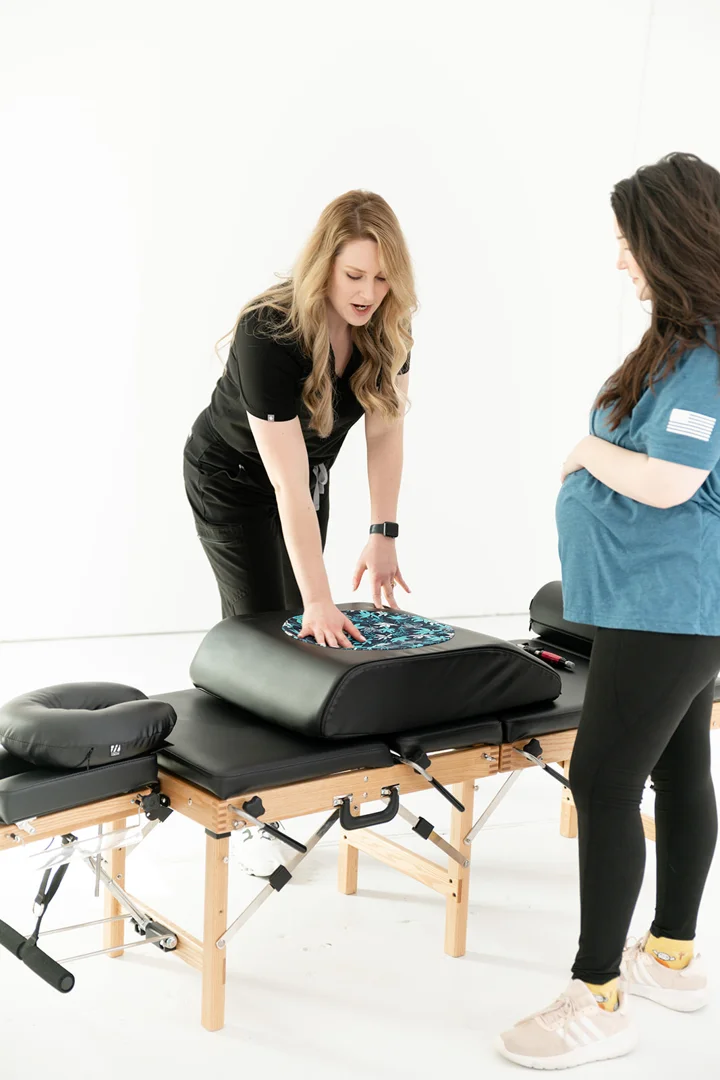
- Gentle, Pregnancy-Specific Manual Care: Targeted manual therapy works to re-establish symmetrical motion across the pelvic ring. Receiving safe pregnancy chiropractic adjustments helps restore balanced biomechanics without forceful twisting. Learning about the benefits of prenatal chiropractic care and what makes prenatal chiropractic different helps mothers understand the gentle, table-assisted techniques designed specifically for a changing body.
- Targeted Stabilizing Exercises: Movement keeps joints nourished and muscles responsive. Incorporate short "movement snacks" throughout the day to support force closure without overloading loose ligaments:
- Seated or Hands-and-Knees Cat-Cow: Gently mobilizes the lumbar spine and pelvis within a pain-free range.
- Transverse Abdominis Bracing: Inhale to expand your ribs, then gently draw your lower belly toward your spine on an exhale.
- Gluteus Medius & Pelvic Floor Coordination: Activating the hip stabilizers balances the pelvic floor. Exploring pelvic floor chiropractic connections can help you build supportive motor control that protects the pelvis during movement.
- External Pelvic Support & Temperature Therapy: A non-elastic trochanteric support belt worn snugly around the pelvic base adds supplemental stability during walking or household tasks. Pair this with localized heat or cold packs applied to the gluteal muscles for 15 minutes to soothe reactive muscle spasms (avoiding heat over the front of the abdomen).
Steps 4 & 5: Daily Ergonomics, Labor Preparation, and Postpartum Healing
- Symmetric Daily Habits & Ergonomics:
- Side-Sleeping: Rest on your side with a firm pillow placed between your knees and ankles to keep your hips parallel.
- Two-Foot Transitions: Sit down when getting dressed. When exiting a car or turning in bed, keep your knees gently pressed together to avoid wide shearing forces across the pubic bone and SI joints.
- Active Stance: Distribute your weight evenly across both feet rather than resting on one hip.
- Labor Preparation and Postpartum Stability: Pelvic girdle pain does not necessitate a cesarean section. In fact, mobile, upright birthing positions such as side-lying, kneeling on hands-and-knees, or leaning over a birthing ball open the pelvic outlet while reducing sacral pressure.
Proper structural alignment can assist fetal descent; research into how chiropractic care may help shorten labor and how balancing pelvic tension supports optimal fetal positioning—even when addressing breech positioning—shows the value of pelvic balance for birth.
After delivery, approximately 90% to 93% of women recover within three months as relaxin levels decrease and core function returns. For the small percentage of mothers with ongoing discomfort, continuing care for your hips after delivery ensures long-term pelvic stability as you care for your newborn.
Finding Clinical Relief for SI Joint & Pelvic Girdle Pain in Late Pregnancy
At Magnolia Chiropractic in Norman, OK, we believe maternal comfort should never be an afterthought. Our practice provides a warm, calm, and supportive environment where mothers and families receive individualized, unhurried attention. We take time to listen, perform thorough evaluations, and tailor our gentle techniques to your unique stage of pregnancy.
Our family-centered care also extends to supporting your baby as they grow. Gentle pediatric chiropractic evaluations support healthy spinal and motor development, ensuring your baby moves comfortably through essential developmental milestones like tummy time, rolling, crawling, and taking their first steps.
If you are experiencing SI joint or pelvic girdle pain during late pregnancy, you do not have to navigate the discomfort alone. Connect with our Prenatal Chiropractor Norman OK team today to schedule an evaluation and experience gentle, evidence-informed care designed to help you move comfortably through pregnancy and birth.
