
Round Ligament Pain 101: The Sharp Pregnancy Pain No One Warns You About
The Sharp Pregnancy Pain That Catches Most Moms Off Guard

What is round ligament pain?
- A sharp, stabbing or pulling pain in the lower abdomen, hips, or groin
- Caused by the stretching of the rope-like ligaments that support your uterus as it grows
- Most common during the second trimester (weeks 14–27)
- Triggered by sudden movements like rolling over, sneezing, coughing, or standing up quickly
- Typically lasts only a few seconds to a few minutes
- Normal and not harmful to you or your baby
One moment you're fine. The next, a sudden sharp pain stops you mid-step. It's startling — and for most pregnant women, completely unexpected.
Round ligament pain affects somewhere between 10% and 90% of pregnancies, depending on the source. That's a wide range, but one thing is clear: it's one of the most common discomforts of pregnancy, and most moms-to-be are never warned about it beforehand.
The good news? It's not dangerous. It's your body doing exactly what it needs to do to support your growing baby.
That said, knowing what it is, why it happens, and what actually helps can make a real difference in how you move through your pregnancy.
I'm Dr. Leah Bagg, a chiropractor based in Norman, OK, with specialized training in prenatal care through organizations like the ICPA and Spinning Babies — and supporting pregnant women through discomforts like round ligament pain is one of the things I care most deeply about. In this guide, I'll walk you through everything you need to know, from anatomy and triggers to practical relief strategies and when to call your provider.
Round Ligament Pain: The Sharp Pregnancy Pain No One Warns You About
When we talk about Round Ligament Pain: The Sharp Pregnancy Pain No One Warns You About, we are referring to a very specific, sudden physical sensation. Many women describe it as a sharp, stabbing, or intense pulling feeling on one or both sides of the lower belly or groin. Because it often strikes during the second trimester—a time when many expect to feel their best—it can be incredibly alarming if you don't know what is happening.
To help you distinguish this common pelvic discomfort from other types of physical sensations you might feel over the course of your pregnancy, we have put together a quick comparison table below.
| Feature | Round Ligament Pain | Braxton Hicks | True Labor Contractions |
|---|---|---|---|
| Sensation | Sharp, stabbing, or sudden pulling spasm | Dull, tight squeeze across the whole uterus | Rhythmic, intense cramping that builds in waves |
| Location | Lower abdomen, hips, or along the bikini line | Generalized across the entire belly | Starts in the back and wraps around to the front |
| Triggers | Sudden movements, coughing, sneezing, rolling over | Dehydration, physical activity, or full bladder | Occurs spontaneously and progressively |
| Duration | A few seconds to a few minutes | 30 seconds to 2 minutes | 30 to 70 seconds, occurring at regular intervals |
| Relief | Rest, slow position changes, pelvic support | Changing positions, drinking water, resting | Does not stop with rest or movement changes |
Understanding the Anatomy: What is Round Ligament Pain: The Sharp Pregnancy Pain No One Warns You About?
To understand why this happens, we have to look at how the body adapts to pregnancy. The round ligaments are two rope-like bands of connective tissue, each measuring about 10 to 12 centimeters long in their non-pregnant state. They attach to the upper corners of the uterus, pass through the inguinal canal in the groin, and anchor to the pubic bones.
In a typical state, these ligaments are short, thick, and highly supportive. They naturally contract and loosen very slowly. However, as your baby grows, your uterus expands from the size of a small pear to the size of a watermelon. To accommodate this, hormones like relaxin and progesterone soften your tissues, allowing the round ligaments to stretch to more than twice their normal length.
According to Cleveland Clinic's guide to round ligament pain, when you make a sudden movement, these stretched ligaments are forced to contract quickly. Because they are already under tension, this rapid contraction triggers a sudden, sharp spasm.
While this is primarily a pregnancy symptom, Healthline's overview of symptoms notes that round ligament pain can occasionally occur in non-pregnant individuals. This is rare and typically associated with underlying conditions such as endometriosis or uterine fibroids. For most women, however, the discomfort begins during pregnancy and fully resolves during chiropractic care postpartum recovery as the uterus and supporting ligaments shrink back to their pre-pregnancy sizes.
Triggers and Timing: When to Expect the Discomfort
Round ligament pain most commonly starts in the second trimester (specifically between weeks 14 and 27). This is the period of rapid uterine growth where the uterus rises out of the pelvis and into the abdomen, putting the greatest initial tension on the supporting tissues.
The pain is highly movement-dependent. Common physical triggers include:
- Rolling over or transitioning in bed
- Coughing, sneezing, or laughing
- Standing up quickly from a seated position
- Walking or exercising for extended periods
- Lifting heavy objects
As detailed in the American Pregnancy Association's insights on causes, any movement that causes a sudden change in the angle or position of your pelvis can catch these taut ligaments off guard, leading to a temporary, painful spasm.
How to Tell the Difference: Round Ligament Pain: The Sharp Pregnancy Pain No One Warns You About vs. Contractions
It is completely natural to wonder if a sudden pain in your belly means you are going into labor. The primary way to differentiate round ligament pain from contractions is duration and pattern. Round ligament pain is a brief, sharp spasm that resolves within a few seconds or minutes once you rest or change positions.
In contrast, Braxton Hicks are painless, irregular tightenings of the entire uterine muscle, while true labor contractions are rhythmic, painful, and gradually increase in frequency and intensity.
Furthermore, pelvic misalignment can exacerbate ligament tension. When the pelvic bones are out of balance, it unevenly pulls on the round ligaments, making them much more susceptible to painful spasms. This structural imbalance is also closely linked to other common discomforts, such as general pregnancy-related back pain and rib pain in the third trimester.
Gentle Relief, Prevention, and Knowing When to Seek Support
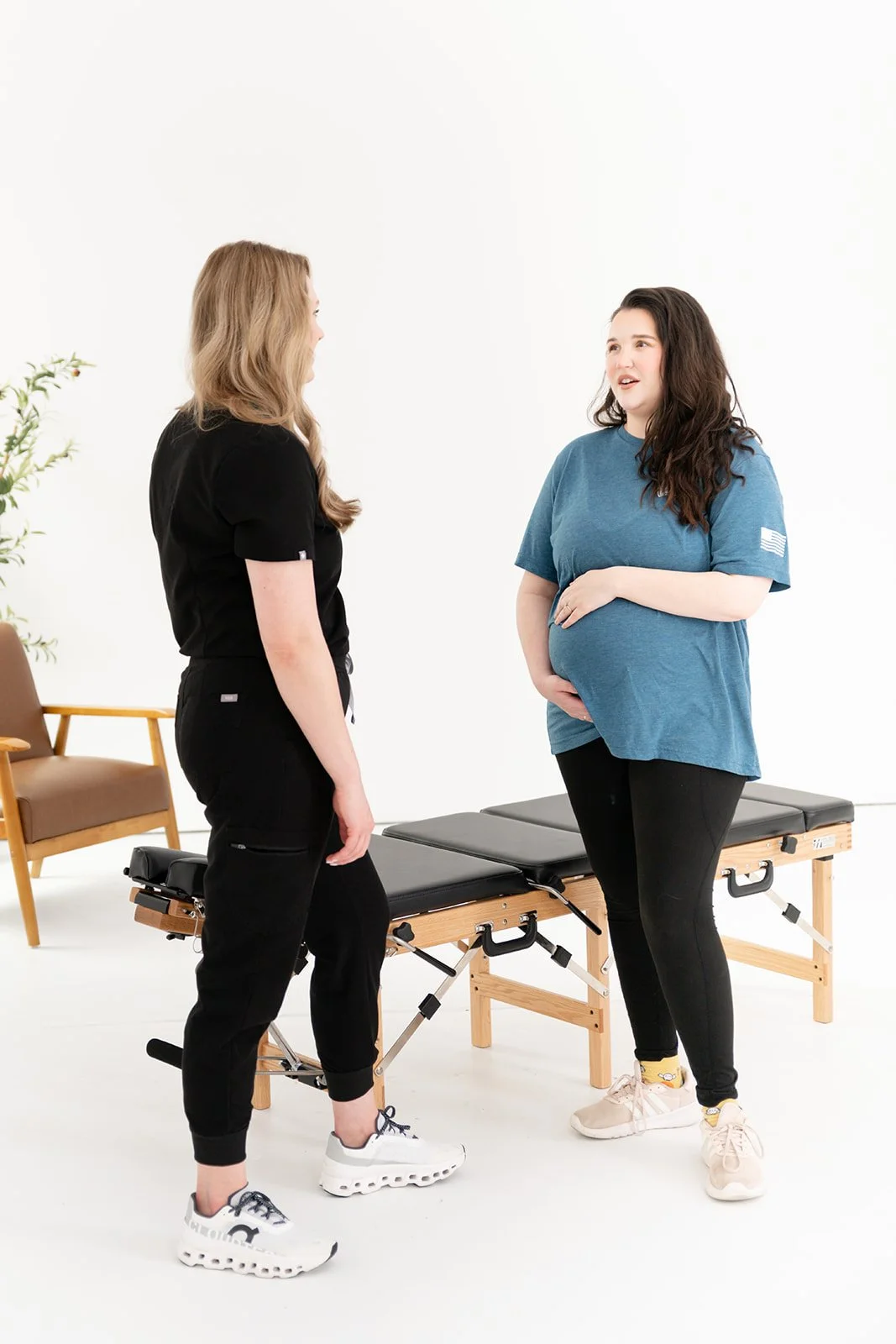
While round ligament pain is a normal part of the pregnancy journey, you do not have to simply sit back and endure it. There are several safe, gentle, and practical ways to manage the discomfort at home while supporting your body's structural alignment.
To protect your ligaments during daily life, we recommend making these simple movement adjustments:
- The Log Roll: When getting out of bed, keep your knees together, roll onto your side, and use your arms to push yourself up to a seated position rather than sitting straight up.
- Support and Flex: Before you sneeze, cough, or laugh, gently bend your hips toward your abdomen and hold your belly with your hands to reduce the sudden pull on your ligaments.
- Slow Transitions: Take a breath and move deliberately when standing up from a chair or getting out of a car.
Practical Home Care and Supportive Exercises
For immediate relief at home, taking a warm (not hot) bath or applying a warm compress to the lower pelvis can help relax the spasming tissues. Many women also find comfort using supportive garments. An elastic belly band or professional kinesiotaping can gently lift the abdomen, taking the direct weight off your stretched ligaments.
Targeted, gentle movement is also key. According to Partum Health's guide to relief, regular, low-impact exercises can help stabilize your core. Additionally, Rupa Health's expert guide suggests incorporating daily stretches such as pelvic tilts, gentle cat-cow stretches, and half-kneeling hip flexor stretches to release tension in the hips and lower abdomen. Always move slowly and breathe deeply into your rib cage during these stretches.
When to Contact Your Healthcare Provider
While round ligament pain is benign, it is important to trust your instincts and monitor for warning signs. You should call your doctor or midwife immediately if your pelvic pain is accompanied by any of the following:
- Pain that is constant, severe, or does not resolve after resting for 30 to 60 minutes
- Vaginal bleeding, spotting, or unusual fluid leaking
- A fever of 101°F (38°C) or higher, or chills
- Nausea, vomiting, or difficulty keeping fluids down
- Pain or burning during urination
- Regular, rhythmic cramping or abdominal tightening (more than four times in an hour), which could indicate preterm labor
How Prenatal Chiropractic Care Offers Lasting Comfort
At Magnolia Chiropractic in Norman, OK, we focus on the root cause of round ligament tension: pelvic alignment. If the bones of your pelvis are misaligned, the round ligaments are pulled unevenly—much like a tight tent string. This asymmetry makes one side work much harder, leading to those sharp, sudden spasms.
We use the Webster Technique, a specific, gentle chiropractic analysis and adjustment designed specifically for pregnant women. By restoring balance to the pelvis, we reduce stress on the round ligaments and the uterus. This supportive care is an essential part of our prenatal chiropractor Norman OK services.
In addition to relieving daily discomfort, maintaining proper pelvic alignment offers broader benefits. Restoring balance to your pelvic structures can play a significant role in shortening labor and delivery time by allowing your baby to find the optimal birth position.
We believe in providing thorough, evidence-based explanations and tailored care for every expectant mother who walks through our doors. If you are ready to find relief and support your body through a comfortable pregnancy, explore the benefits of prenatal chiropractic care and reach out to us today.
