
The Ultimate Guide to Chiropractic Care for Breech Positioning
What Every Expectant Parent Should Know About Breech Positioning and Chiropractic Care
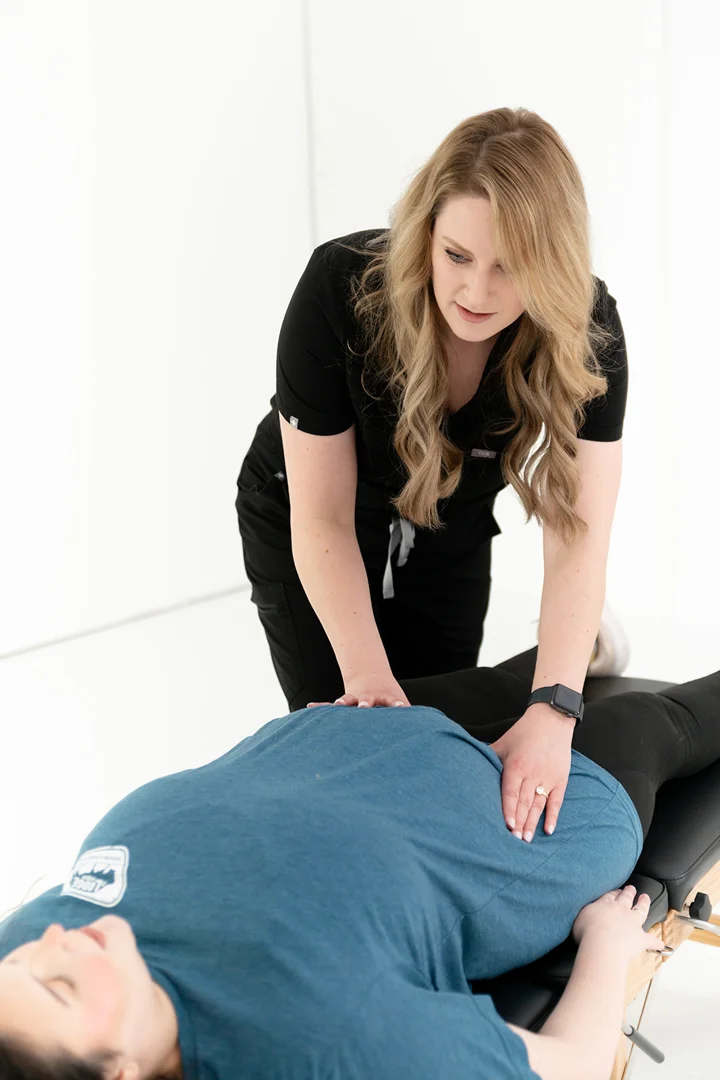
How chiropractic care can help with breech positioning is one of the most common questions parents ask in the third trimester — and the short answer is: it may help by gently improving pelvic balance, which gives your baby more room to move into a head-down position on its own.
Quick answer:
- Around 25% of babies are in a breech position at 32 weeks
- Most turn on their own — but about 3–4% remain breech at full term
- Chiropractic care, specifically the Webster Technique, works by reducing tension in the pelvis and supporting ligaments
- This creates more space in the uterus so the baby can reposition naturally
- A 2002 study published in the Journal of Manipulative and Physiological Therapeutics reported an 82% success rate among chiropractors using this technique
- It does not manually move the baby — it supports your body so the baby can move itself
If your provider has told you your baby is breech, it can feel unsettling. But it's worth knowing that many babies turn on their own, and there are gentle, evidence-based options worth exploring alongside your regular prenatal care.
I'm Dr. Leah Bagg, a chiropractor with specialized training through the International Chiropractic Pediatric Association (ICPA) and Spinning Babies, and supporting pregnant women through questions exactly like how chiropractic care can help with breech positioning is one of my greatest passions at Magnolia Chiropractic.
How Chiropractic Care Can Help With Breech Positioning
When we look at how the body adapts during pregnancy, we see a beautiful, complex system of bones, muscles, and ligaments working together to support a growing life. However, physical changes can sometimes lead to imbalances in the pelvis. When the pelvis is misaligned, it can create uneven tension in the surrounding muscles and uterine ligaments. This state of imbalance is often referred to as intrauterine constraint.
Rather than focusing on the baby itself, we look at the environment holding the baby. How chiropractic care can help with breech positioning comes down to restoring balance to this environment. By gently aligning the pelvic bones and relieving tension in the supporting soft tissues, we help reduce uterine constraint. When the uterus has optimal, symmetrical space, your baby is naturally encouraged to find the most comfortable and safest head-down position for birth.
Furthermore, a balanced pelvis supports healthy nervous system communication. The nerves exiting the lower spine supply the uterus and pelvic organs; keeping this pathway clear supports overall maternal wellness and allows for optimal fetal movement.
Understanding Breech Presentation and Fetal Positioning
To understand why fetal presentation matters, it helps to look at how babies naturally position themselves as birth approaches. In the early and middle stages of pregnancy, babies have plenty of room to flip, roll, and swim. At 28 to 30 weeks, fetal malpresentation is relatively common, but about 75% of these babies will spontaneously reposition into a cephalic (head-down) presentation by full term.
As the third trimester progresses and space becomes cozy, the frequency of breech presentation naturally decreases from 21% at the start of the third trimester to about 3% to 4% at 40 weeks.
When a baby does not make that final turn, they are considered to be in a breech presentation. There are three main types of breech positions:
- Frank Breech: The baby's buttocks are targeted to enter the pelvis first, with the legs folded flat against the body and feet up near the head. This is the most common type of breech position.
- Complete Breech: The baby is sitting cross-legged in the pelvis, with both the hips and knees bent.
- Footling Breech: One or both of the baby's feet are pointed downward, positioned to deliver first.
Understanding these positions is essential because fetal presentation directly impacts birth options. While vaginal breech births are possible under very specific, highly trained medical supervision, a planned cesarean section is frequently recommended. Research indicates that a planned cesarean for term breech delivery reduces the relative risk of neonatal death or serious morbidity by 33%. This is why finding gentle, non-invasive ways to support natural head-down positioning prior to labor is so important to many expectant families.
The Role of Pelvic Alignment and Maternal Comfort
During pregnancy, a hormone called relaxin increases joint mobility to prepare the pelvis for birth. While this is a necessary process, it can make the pelvic joints—particularly the sacroiliac (SI) joints—more vulnerable to shifting out of alignment.
When the pelvis is misaligned, the ligaments supporting the uterus (such as the round ligaments and uterosacral ligaments) can pull unevenly. This asymmetrical tension can cause uterine torsion, which physically limits the space your baby has to rotate.
For the mother, pelvic misalignment often manifests as discomfort. Experiencing pregnancy back pain or sharp, pulling sensations in the lower abdomen (round ligament pain) are common signs that the pelvis and its supporting tissues are under uneven stress. Restoring pelvic alignment not only helps alleviate these daily discomforts but also directly addresses the structural constraints that might be keeping your baby in a breech position.
The Webster Technique: A Gentle Approach to Pelvic Symmetry
The primary tool prenatal chiropractors use to address pelvic imbalance is the Webster Technique. Developed in the 1980s by Dr. Larry Webster, founder of the ICPA, this method is a highly specific chiropractic analysis and gentle adjustment.
It is important to emphasize that the Webster Technique is not a manual fetal turn. We do not apply external force to the abdomen to physically move the baby. Instead, we focus entirely on the mother's pelvic symmetry.
To learn more about the specifics of this approach, you can read our detailed guide, Webster Technique 101. During a Webster adjustment, we assess the alignment of the sacrum (the triangular bone at the base of the spine) and make a very gentle, low-force adjustment using a specialized pregnancy pillow or a drop-table mechanism. We then evaluate and gently release tension in the surrounding pelvic muscles and ligaments, such as the round ligament.
While case studies and clinical surveys—such as the landmark 2002 study reporting an 82% success rate—show highly encouraging outcomes, we always maintain a realistic, evidence-based perspective. For example, scientific research on breech repositioning highlights that certain underlying maternal or fetal factors can sometimes prevent a baby from turning, even with proper pelvic alignment. A classic example is oligohydramnios (low amniotic fluid), which physically limits fetal mobility. This is why we view chiropractic care not as a guaranteed "cure" for breech positioning, but as a safe, supportive way to optimize your body's natural mechanics.
Safe Alternatives and Co-Managing Your Prenatal Care Journey
At Magnolia Chiropractic, we believe that the safest and most supportive prenatal care happens when providers work together. We encourage open communication and active co-management with your obstetrician, midwife, and other prenatal care providers. Our goal is to support your comfort and birth goals while prioritizing maternal and fetal safety above all else. Understanding the prenatal chiropractic benefits we offer can help you make informed decisions alongside your entire birth team.
Supporting Medical Care: Chiropractic and Obstetric Collaboration
If your baby remains breech past 36 or 37 weeks, your OB/GYN or midwife may discuss an External Cephalic Version (ECV). An ECV is a medical procedure where a physician uses their hands on your abdomen to physically guide the baby into a head-down position.
Chiropractic care can serve as an excellent, non-invasive complement to medical interventions like an ECV. By utilizing the Webster Technique to balance the pelvis and relax the uterine ligaments beforehand, we can help ensure the uterus is as relaxed and spacious as possible, which may support the ease of the medical procedure.
In addition to chiropractic adjustments, we often discuss gentle prenatal stretching, optimal maternal posture, and light movement patterns you can safely practice at home to maintain pelvic balance.
| Aspect | Webster Technique (Chiropractic Support) | External Cephalic Version (Medical ECV) |
|---|---|---|
| Primary Goal | Restore pelvic alignment and reduce uterine constraint | Physically turn the baby from the outside |
| Method | Gentle sacral adjustments and light ligament releases | Direct manual manipulation of the abdomen |
| Who Performs It | Certified Prenatal Chiropractor | Obstetrician / Medical Doctor |
| Invasiveness | Non-invasive, gentle, and relaxing | Moderately invasive; performed in a clinical setting |
| Typical Timing | Recommended throughout pregnancy or starting early 3rd trimester | Typically performed between 36 and 38 weeks |
Beyond Birth: Supporting Your Baby's Developmental Journey
Our care and support for your family do not end when your baby is born. The physical transition of birth—especially if the baby spent the final weeks of pregnancy in a restricted breech position—can place unique physical stress on a newborn's delicate spine and nervous system.
Pediatric chiropractic care offers exceptionally gentle, pressure-point adjustments (no more pressure than you would use to test the ripeness of a tomato) to support your baby's nervous system regulation and physical growth.
As your baby grows, maintaining proper spinal and pelvic alignment supports their natural progression through vital developmental milestones. From building neck strength for tummy time to developing the coordination needed for crawling and eventually walking, a balanced nervous system is key. To explore how gentle pediatric care can benefit your little one's early years, we invite you to read more about pediatric development.
Partnering with Magnolia Chiropractic in Norman, OK
At Magnolia Chiropractic in Norman, OK, we are committed to providing patient-centered, evidence-based care tailored entirely to your unique pregnancy journey. We know that your time is valuable and your transition into parenthood is sacred. Unlike high-volume, rushed clinics, we take the time to listen, thoroughly explain our techniques, and design custom care plans that respect your comfort and your birth goals.
If you are navigating the third trimester and want to explore how gentle pelvic alignment can support you and your baby, we are here to help. You can easily Schedule a prenatal consultation with us at our Norman office. Let us help you find comfort, balance, and quiet confidence as you prepare to welcome your baby into the world.
