
In-Depth Guide to Hip Changes Post-Delivery
Your Body Keeps Changing After Birth — Here's What Most Moms Aren't Told About Their Hips
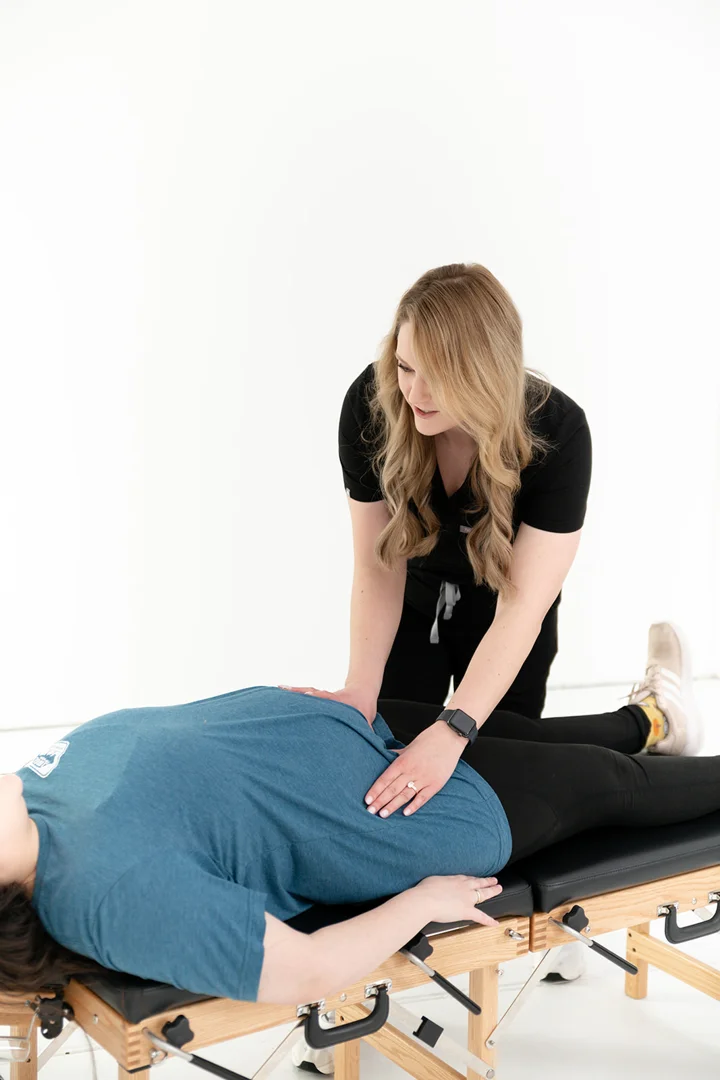
What nobody tells you about your hips after delivery is that the aching, instability, and unexpected widening you feel are not just "normal soreness" — they have real, specific causes that can last for months if left unaddressed.
Here is a quick overview of what is actually happening:
- Relaxin hormone stays elevated after birth (especially while breastfeeding), keeping your ligaments looser than normal for up to 12 months
- Pelvic joints shift during pregnancy and delivery — some of those structural changes can be permanent
- Core and glute weakness forces your hips to overwork, causing tightness and pain
- C-section scar tissue can create pulling and fascial restrictions that affect your hips and lower back
- Daily newborn care — carrying, feeding, bending over a crib — puts repetitive strain on an already vulnerable pelvis
- Pelvic floor dysfunction and hip pain are often connected, not separate problems
Most of these issues are treatable. But first, you need to know they exist.
Many new moms describe the feeling of early motherhood as running a marathon they didn't train for — exhausted, sore in unexpected places, and unsure what is normal. If your hips feel unstable, achy, or just different than before, you are not imagining it. Your body went through something significant, and your hips are often the place that shows it most.
This guide walks you through exactly what is happening, why it happens, and what you can do about it — from gentle daily habits to knowing when to seek professional support.
I'm Dr. Leah Bagg, a chiropractor at Magnolia Chiropractic in Norman, OK, with specialized training in prenatal and postpartum care through organizations including the ICPA and Spinning Babies. Supporting women through the physical realities of what nobody tells you about your hips after delivery is one of the things I care most about in my practice. I hope this guide helps you feel informed, supported, and confident in your recovery.
What Nobody Tells You About Your Hips After Delivery
When you are pregnant, much of the focus is on your growing belly and preparing for labor. But once your baby is born, your body undergoes a rapid and sometimes jarring physical transition. Your hips and pelvis, which spent 40 weeks expanding and adapting to carry your baby, are suddenly expected to stabilize your entire upper body while you navigate the physical demands of newborn care.
Many women are surprised to find that their hips feel wider, looser, or misaligned long after delivery. This is because your pelvis is not a single, solid bone; it is a ring of bones held together by strong ligaments. During pregnancy, these ligaments stretch, and the joints themselves can shift.
To help you understand what you are feeling, we have put together a simple guide comparing common postpartum pelvic sensations:
| Postpartum Hip Sensation | What It Feels Like | Is It Normal Recovery? | When to Seek Care |
|---|---|---|---|
| Mild joint laxity or "looseness" | A general feeling of instability, especially when standing on one leg or rolling over in bed. | Yes, very common in the first few months due to lingering hormones. | If it causes sharp pain, limits your mobility, or persists beyond 6 to 12 months. |
| Deep, localized back or pelvic ache | A dull, tired ache in the lower back or back of the pelvis after a long day of carrying your baby. | Yes, often related to muscle fatigue and shifting posture. | If the pain is sharp, shoots down your leg, or does not improve with rest. |
| Clicking, catching, or sharp groin pain | A distinct pinching or catching sensation inside the hip joint, or pain where your pubic bones meet. | Common but indicates joint irritation or muscle compensation. | If it makes walking, taking stairs, or lifting your baby painful or difficult. |
| Numbness, tingling, or burning | A pins-and-needles sensation in your hips, thighs, or buttocks. | No, this usually points to nerve irritation or compression. | Seek professional evaluation to identify the source of nerve pressure. |
The Hormonal Reality: Why Your Joints Feel Loose Months Later
During pregnancy, your body produces a hormone called relaxin. True to its name, relaxin's primary job is to soften and relax the ligaments and joints in your pelvis, allowing them to stretch and open so your baby can pass through the birth canal.
What many mothers do not realize is that relaxin does not simply disappear the moment your baby is born. In fact, relaxin can remain elevated in your system for several months postpartum, and it often stays elevated even longer—up to a year—if you are breastfeeding.
This prolonged hormonal presence means your joints and ligaments remain vulnerable and hyper-mobile during a time when you are constantly lifting, twisting, and carrying extra weight. According to clinical resources on Postpartum Hip Pain Explained: Common Reasons, Recovery Tips, and When to See a Doctor | OnlyMyHealth , this ongoing joint laxity makes proper alignment and muscle support absolutely essential to prevent long-term strain or injury.
Postpartum Hip Pain Explained: Structural Shifts and Compensation Patterns
Because your ligaments are loose, your pelvic joints can easily shift out of their optimal alignment. The two primary areas where this occurs are the Sacroiliac (SI) joints (the two joints at the back of your pelvis) and the pubic symphysis (the joint at the front). When these joints are unstable or misaligned, it can lead to Pelvic Girdle Pain (PGP), which often manifests as a deep, nagging ache in the buttocks, groin, or outer hips. Over 50% of women experience pregnancy-related lumbopelvic or hip pain, and for some, these symptoms can linger well into the postpartum period.
Furthermore, if you had a C-section, your hip and pelvic function may be affected in ways you might not expect. A C-section is a major abdominal surgery. As the incision heals, scar tissue and fascial restrictions can develop. This scar tissue can pull on the surrounding tissues, creating a subtle but persistent tug on your abdominal wall, bladder, and pelvis.
This pulling can alter how your pelvis moves, leading to compensatory patterns where your hip muscles overwork to stabilize your core. For more detailed information on how these structural changes impact your body, you can read our article on Pregnancy Related Back Pain and explore the insights shared by medical experts in this guide on Postpartum Pain: Relief for Common Symptoms | Cedars-Sinai | Cedars-Sinai .
What Nobody Tells You About Your Hips After Delivery: The Pelvic Floor Connection
Your hips and your pelvic floor do not function in isolation; they are part of an integrated, deep-core system. The muscles of your pelvic floor attach directly to the inside of your pelvis and hip joints. When your core and pelvic floor are weakened or stretched during pregnancy and delivery, your outer hip muscles—particularly your glutes and deep hip rotators like the piriformis—will often tighten and spasm in an attempt to stabilize your pelvis.
This compensation can lead to a condition some call "postpartum pancake booty," where the glutes become underutilized and weak, while the deep hip muscles become chronically tight and painful. This imbalance can also contribute to pelvic floor issues, such as urinary incontinence, which affects approximately 30% of female runners postpartum.
To learn more about how chiropractic care can help restore balance to this system, read our guide on Pelvic Floor Chiropractic: The Connection Most Moms Don't Know About. Rebuilding this foundation is a gradual process, and you can find safe, practical steps in our resource on How to Rebuild Core Strength Safely After Pregnancy.
What Nobody Tells You About Your Hips After Delivery: Daily Habits That Strain Your Pelvis
In the early weeks and months of motherhood, your daily routine is filled with repetitive movements that can inadvertently strain your hips and pelvis. Recognizing these habits is the first step toward finding relief:
- The "Mom Hip" Carry: It is incredibly common to prop your baby on one hip while using your other hand to complete daily tasks. This asymmetrical posture places a massive, uneven load on one side of your pelvis and can pull your SI joints out of alignment.
- Hunching While Feeding: Whether you are breastfeeding or bottle-feeding, it is easy to slouch or lean forward over your baby. This rounded posture weakens your deep core and forces your hip flexors to tighten.
- Diaper Changing Ergonomics: Bending over low surfaces like a bed or a low changing table repeatedly throughout the day strains your lower back and hips.
- Side-Sleeping Without Support: Sleeping on your side without proper support can cause your top leg to drop forward, twisting your pelvis and straining your hip joints overnight.
Simple Modifications for Daily Relief: To protect your hips, try carrying your baby centered against your chest using a supportive carrier. When feeding, bring your baby up to your breast or bottle using pillows, rather than leaning down to them. Elevate your diaper changing station to waist height so you do not have to bend forward.
When sleeping on your side, place a firm pillow between your knees and ankles to keep your hips in a neutral, stacked alignment. If you experience significant pelvic instability, utilizing a sacroiliac (SI) belt can help by reducing shear forces across your pelvic joints by up to 40%, providing temporary stability while you rebuild your strength.
Gentle Exercises and Stretches for Postpartum Hip Realignment
When your pelvis is irritated and unstable, aggressive stretching or high-impact workouts can often backfire, leading to more pain and muscle guarding. Instead, focus on gentle, stabilizing movements that encourage proper alignment and deep core activation:
- Diaphragmatic Breathing: Lie on your back with your knees bent. Place one hand on your chest and one on your belly. Inhale deeply through your nose, allowing your belly and rib cage to expand fully. Exhale slowly through your mouth, gently drawing your lower abdomen in. This helps coordinate your diaphragm and pelvic floor.
- Posterior Pelvic Tilts: Lying in the same position, gently press your lower back flat into the floor by tilting your pelvis backward. Hold for a few seconds, then release. This gently mobilizes the lower back and activates the deep abdominal muscles.
- Glute Bridges (with optional ball squeeze): Lie on your back with your knees bent and feet flat on the floor. Place a small, soft ball or a rolled-up towel between your knees. Gently squeeze the ball, press through your heels, and lift your hips toward the ceiling. Avoid arching your lower back. This exercises your glutes, adductors, and pelvic floor together.
- Gentle Hip Flexor and Piriformis Stretches: Perform mild, passive stretches to release tightness in the front of your hips and buttocks, holding each stretch for 20–30 seconds while breathing deeply. Avoid pushing into any sharp pain.
Supporting Your Postpartum Recovery Journey
Postpartum recovery is not a race, and your body deserves time, patience, and targeted support to heal. At Magnolia Chiropractic in Norman, OK, we focus on helping new mothers navigate this transition safely. Gentle chiropractic care during the postpartum period is designed to support your body's natural healing process, restore proper joint mechanics, and regulate your nervous system.
When your pelvis is aligned and your nervous system is calm, your body can rest, recover, and adapt to the beautiful but demanding journey of motherhood. Learn more about our approach to postnatal care by reading about Chiropractic Care Postpartum Recovery.
When to Seek Professional Support for Postpartum Hip Recovery
While mild soreness and a feeling of transition are common in the early weeks after birth, persistent or worsening pain is a signal that your body needs professional attention. You should not have to simply "live with" pain or wait for it to magically resolve.
When to schedule an evaluation:
- Your hip or pelvic pain has lasted longer than two weeks without improvement.
- You experience sharp, catching, or clicking sensations in your hip joints during daily movements.
- You have difficulty walking, standing on one leg, or lifting your baby.
- You experience numbness, tingling, or a "pins-and-needles" sensation radiating down your legs.
- Your hip pain is accompanied by pelvic floor symptoms, such as persistent urinary leakage or pelvic pressure.
If you are experiencing any of these symptoms, a collaborative approach involving gentle chiropractic care and pelvic floor physical therapy can be incredibly beneficial. We invite you to visit our Prenatal Chiropractor Norman OK page to learn more about how we support mothers in Norman and the surrounding OKC metro area. We are here to help you rebuild your strength, restore your alignment, and enjoy motherhood with comfort and confidence.
