
Everything You Need to Know About Pelvic Floor & Chiropractic
What Most Moms Don't Realize About Pelvic Floor Health and Chiropractic Care

Pelvic floor and chiropractic: the connection most moms don't know about is simpler than it sounds — and more important than most people realize.
Here's the short answer:
- Your pelvic floor is a group of muscles that supports your bladder, uterus, and bowel
- Pregnancy and childbirth place enormous stress on these muscles — and on your spine and pelvis
- When your spinal and pelvic alignment is off, the nerves that control your pelvic floor can't communicate properly
- Chiropractic care restores that alignment, helping your pelvic floor muscles work the way they're supposed to
- This makes chiropractic a meaningful (and often overlooked) part of pelvic floor recovery for moms
One in four women will experience pelvic floor dysfunction at some point in their lives. After a vaginal birth, that number jumps dramatically — over 90% of women show some degree of pelvic floor injury. And yet, symptoms like leaking, pelvic heaviness, or pain during intimacy are so commonly brushed off as "just part of motherhood" that most women never seek help.
They should.
The pelvic floor doesn't work in isolation. It's part of a connected system involving your spine, sacrum, hips, diaphragm, and deep core muscles. When any part of that system is out of balance — which pregnancy almost always causes — the entire foundation can struggle.
That's where chiropractic care enters the picture in a way many moms haven't heard about.
I'm Dr. Leah Bagg, a chiropractor at Magnolia Chiropractic in Norman, OK, with specialized training through the ICPA and Spinning Babies, and a particular passion for supporting women through every stage of pregnancy and postpartum recovery. Understanding pelvic floor and chiropractic: the connection most moms don't know about is something I work to share with every patient I see, because the right support at the right time can make an enormous difference.
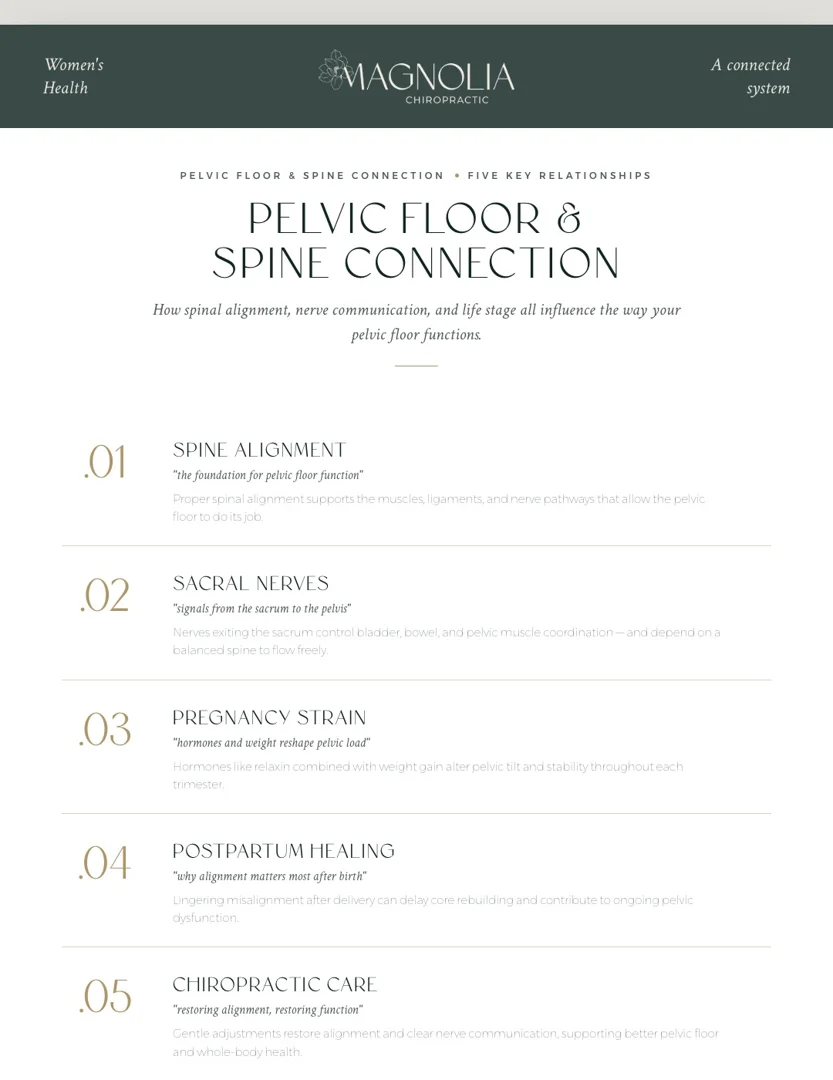
Pelvic Floor & Chiropractic: The Connection Most Moms Don't Know About
When you think about the pelvic floor, you might picture an isolated hammock of muscles. But structurally and neurologically, your pelvic floor is anchored directly to your bony pelvis and sacrum. If the bones of your pelvis are rotated, tilted, or uneven, the muscles attached to them are forced to compensate. This structural strain often leads to chronic tightness, weakness, or instability.
From a neurological perspective, the nerves that tell your pelvic floor muscles when to contract and when to relax emerge from your lower spine and sacrum. When spinal misalignments (known as subluxations) irritate or compress these sacral nerves, it disrupts the communication between your brain and your pelvic floor.
By restoring proper pelvic tilt and spinal alignment, gentle chiropractic adjustments help regulate nervous system communication. This structural and neurological reset allows the pelvic organs and supporting muscles to function with greater ease. Exploring the Benefits of Prenatal Chiropractic Care shows how maintaining alignment during these transitions supports the entire body. Furthermore, understanding how to address these structural roots is key to learning how Chiropractic and Pelvic Floor Health: Restore Stability works to bring the core back into a state of ease.
Beyond Kegels: The Pelvic Alignment Link
For decades, the standard advice for any pelvic floor issue was simple: "Just do more Kegels." However, this one-size-fits-all approach can actually make certain problems worse.
Pelvic floor dysfunction generally falls into two categories:
- Hypotonic (weak) muscles: The muscles lack the tone to support your organs, often leading to leaking or pelvic organ prolapse.
- Hypertonic (tight) muscles: The muscles are locked in a state of constant contraction. If you perform repetitive Kegels on already hypertonic muscles, you can increase pelvic pain, make urination difficult, and worsen symptoms like leaking when you sneeze or lift.
For your pelvic floor muscles to fully contract and relax, your pelvic joints—specifically the pubic symphysis, sacroiliac (SI) joints, and the coccyx (tailbone)—must move freely. Restricted joint mobility forces the surrounding soft tissues to tighten up in self-defense.
By utilizing chiropractic care to gently restore joint mobility, we allow these muscles to move through their full, healthy range of motion. Supporting your alignment also supports your nervous system, reminding us that Pregnancy isn't just a physical journey, it's a nervous system ... development that deserves gentle, intentional care.
How Pregnancy and Childbirth Impact Your Pelvic Stability
During pregnancy, your body releases a hormone called relaxin, which softens your ligaments to allow the pelvis to widen for birth. While relaxin is essential, it also introduces significant joint instability. As your baby grows, your center of gravity shifts forward, increasing pelvic tilt and placing immense downward pressure on your pelvic floor.
This combination of hormonal changes and structural shifts can lead to common struggles like Pregnancy Related Back Pain.
Without proper alignment, this instability can manifest in several ways postpartum:
- Urinary incontinence: Leaking when laughing, coughing, or exercising.
- Pelvic organ prolapse: A feeling of heaviness or pressure in the pelvis as organs lose their structural support.
- Pain during intimacy: Tight, spasming pelvic floor muscles compensating for unstable joints.
- Delayed postpartum symptoms: Discomfort that often appears weeks or months after birth as your daily activity levels increase.
Gentle Chiropractic Techniques for Prenatal and Postpartum Support
At Magnolia Chiropractic, we prioritize gentle, evidence-based adjustments tailored specifically for a mother's changing body.
A primary tool we use is the Webster Technique, a specific chiropractic analysis and gentle adjustment that reduces pelvic imbalance and eases tension on the surrounding ligaments and muscles. By focusing on sacral adjustments and targeted soft tissue release, we help balance the pelvis, which in turn reduces stress on the pelvic floor.
Whether you are preparing for birth or navigating the postpartum period, working with a prenatal chiropractor can help. To learn more about how this specific analysis supports your body, you can read about the Webster Technique 101. If you are looking for local care, visiting a specialized Prenatal Chiropractor Norman OK ensures you receive tailored, gentle support. For additional perspective on how specialized providers care for mothers, you can explore how providers in other regions approach this, such as How a Prenatal Chiropractor Supports Pregnancy in MN.
The Synergy of Chiropractic Care and Pelvic Floor Physical Therapy
We believe that the best outcomes occur when healthcare providers work together. Chiropractic care and pelvic floor physical therapy (PFPT) are highly complementary. While we focus on the structural alignment of the pelvis and the function of the nervous system, a pelvic floor therapist specializes in internal muscle rehabilitation and soft tissue retraining.
| Feature | Chiropractic Care | Pelvic Floor Physical Therapy |
|---|---|---|
| Primary Focus | Structural pelvic alignment, joint mobility, and nervous system function | Muscular retraining, internal pelvic floor release, and muscle strengthening |
| Method | Gentle external adjustments, sacral balancing, and soft tissue work | External and internal muscle therapy, biofeedback, and targeted exercises |
| Core Benefit | Builds a level, aligned foundation so muscles can function without compensating | Rebuilds muscle coordination, strength, and endurance |
This collaborative approach is incredibly beneficial for conditions like diastasis recti (abdominal separation). By combining gentle chiropractic adjustments with specialized breathing techniques and physical therapy exercises, moms can learn How to Rebuild Core Strength Safely After Pregnancy.
For comprehensive, local pelvic therapy options, we often coordinate with trusted regional specialists. You can learn more about specialized hospital-based programs at Pelvic Floor Therapy | Norman Regional Health System or explore dedicated private practices like Womens Pelvic Health - Heinen Physical Therapy - Oklahoma City OK.
Practical Sleep and Lifestyle Adjustments for Pelvic Recovery
While clinical care is essential, the choices you make at home play a massive role in your comfort and recovery. Sleep can become surprisingly difficult during and after pregnancy, but simple alignment adjustments can protect your pelvis throughout the night.
- Prioritize Side Sleeping: Sleeping on your side (especially the left side) improves systemic circulation.
- Use Supportive Pillows: Place a pillow between your knees and ankles to keep your hips level, prevent your top leg from twisting your pelvis, and place another pillow under your belly for support.
- Master the "Log Roll": When turning over or getting out of bed, keep your knees together, engage your core gently, and roll your shoulders, hips, and knees as a single unit to avoid twisting your pelvis.
- Wind Down Your Nervous System: Support your body’s transition to sleep with gentle diaphragmatic breathing, which naturally co-contracts and relaxes the pelvic floor.
A Collaborative Path to Postpartum Recovery and Long-Term Wellness
Postpartum recovery is a gradual journey that extends far beyond the initial six-week checkup. True healing involves restoring structural balance, rebuilding core stability, and supporting your nervous system as you adapt to the physical demands of motherhood.
As a family-centered practice, our care often extends to the youngest members of your family. When we support your baby's alignment, we are also supporting their nervous system as they reach exciting pediatric milestones like crawling and walking. Ensuring your child's spine and nervous system develop with ease goes hand-in-hand with your own recovery. To read more about how to navigate this chapter of motherhood, explore our guide on Chiropractic Care Postpartum Recovery.
Restoring Balance: Pelvic Floor & Chiropractic: The Connection Most Moms Don't Know About
At Magnolia Chiropractic in Norman, OK, we provide patient-centered, evidence-based care in a warm, unhurried environment. We take the time to listen to your story, explain the "why" behind your symptoms, and create a tailored care plan that respects your body’s unique needs. You do not have to accept pelvic discomfort or leaking as an inevitable part of being a mom.
If you are ready to support your body's natural ability to heal, we are here to walk alongside you. Schedule a consultation for prenatal and postpartum pelvic support with us at our Norman office and take a gentle step toward lasting comfort and strength.
