
Cheat Sheet to Safe Movement & Exercise by Trimester
The Complete Guide to Safe Movement & Exercise by Trimester
Practicing safe movement & exercise by trimester helps your body adapt to pregnancy with strength, comfort, and confidence. In the first trimester, prioritize gentle habits, upright bodyweight exercises, and RPE pacing to navigate fatigue and morning sickness. During the second trimester, focus on unilateral strength, postural alignment, and avoiding prolonged supine positions as your bump grows. In the third trimester, transition toward low-impact mobility like swimming, birthing ball exercises, and pelvic floor relaxation for labor preparation.
The American College of Obstetricians and Gynecologists (ACOG) encourages 150 minutes of weekly moderate activity, confirming that exercise does not increase the risk of miscarriage or preterm delivery in healthy pregnancies. Routine movement fundamentally alters your cardiovascular and metabolic health during this journey. Expectant mothers who exercise consistently reduce their risk of developing gestational diabetes and lower their odds of preeclampsia. Scientific research on clinical benefits of prenatal activity shows that moving throughout pregnancy also decreases the risk of macrosomia, cesarean birth, pelvic girdle strain, and urinary incontinence. As the hormone relaxin increases ligamentous laxity to accommodate your growing baby, your joints require supportive muscular stability rather than excessive stretching.
| Trimester | Typical Energy & Symptoms | Target Movement & Focus | Key Adaptations & Swaps |
|---|---|---|---|
| First Trimester (Weeks 1–12) | Fatigue, morning sickness, expanding blood volume | Walking, prenatal yoga, foundational bodyweight squats | Upright positioning to reduce nausea; use the Rate of Perceived Exertion (RPE) |
| Second Trimester (Weeks 13–26) | "Honeymoon phase," renewed energy, growing bump | Unilateral strength, resistance band rows, stability ball work | Avoid prolonged flat-back (supine) positions; widen squat stance |
| Third Trimester (Weeks 27–40+) | Joint pressure, reduced lung capacity, pelvic heaviness | Swimming, birthing ball circles, supported deep squats | Emphasize low impact, pelvic floor relaxation, and labor preparation |
First Trimester: Gentle Habits, Fatigue Management, and Core Foundations
The first twelve weeks are marked by quiet yet monumental internal changes. Even before your baby bump is visible, your body is building the placenta and increasing blood volume. This surge in progesterone often brings waves of morning sickness and deep fatigue.
If you feel completely drained on certain days, give yourself grace. Movement should restore your energy, not deplete it. To manage morning sickness, prioritize upright exercises such as bodyweight squats, incline wall pushups, or seated cable rows over bent-over movements that trigger reflux.
Instead of obsessing over heart rate monitors, measure your intensity using the Rate of Perceived Exertion (RPE) on a 1-to-10 scale. Aim for a moderate exertion level of 4 to 6, where you can easily speak full sentences.
If you were inactive before conception, you can safely begin exercising now. Start with 10- to 15-minute walks and gentle mobility work, gradually building toward the recommended 150 minutes of weekly activity. Research shows zero link between moderate first-trimester exercise and miscarriage, so you can move with confidence.
Second Trimester: Unilateral Strength, Postural Alignment, and Bump Adaptations
Spanning weeks 13 through 26, the second trimester often brings a welcome boost in energy. As your bump emerges, your center of gravity shifts forward, increasing the lumbar curve in your lower back.
During this stage, unilateral (single-leg and single-arm) strength exercises become invaluable. Movements like suitcase carries, split-stance dumbbell rows, and step-ups correct side-to-side muscle imbalances. This functional stability prepares your body for the physical demands of motherhood, such as carrying an infant car seat on one side while holding groceries with the other.
As the uterus expands, lying flat on your back (the supine position) for extended periods after week 16 can compress the inferior vena cava—the large vein returning blood to your heart. This compression can cause sudden dizziness or lightheadedness. Transition all flat bench presses or supine floor exercises to incline benches, side-lying postures, or hands-and-knees (quadruped) positions.
This rapid uterine growth can also tug on the stabilizing pelvic ligaments, leading to Round Ligament Pain 101: The Sharp Pregnancy Pain No One Warns You About. If you notice dull aching in your lumbar spine, incorporating supported pelvic tilts helps soothe Pregnancy Related Back Pain without stressing vulnerable pelvic joints.
Third Trimester Strategies: Safe Movement & Exercise by Trimester for Labor Prep
Entering week 27 and beyond, your workouts naturally pivot from building strength to maintaining mobility, managing swelling, and preparing the pelvic outlet for labor and delivery.
Your lungs have less room to expand beneath the diaphragm, making shorter, more frequent movement sessions ideal. Breaking your daily 30 minutes into two 15-minute walks relieves cardiovascular strain while promoting healthy circulation to your lower extremities.
Swimming is often considered the gold standard for late pregnancy. Water buoyancy counteracts gravity, completely offloading pelvic floor pressure and decompressing the spine. On land, sitting on an exercise ball to perform gentle pelvic circles and figure-eights relieves sacroiliac tension and encourages optimal fetal positioning.
Targeted mobility exercises also help manage late-stage aches. Gentle seated figure-4 stretches open the deep gluteal muscles when addressing Sciatica in Pregnancy: When It's More Than Normal Back Pain. As your rib cage flares outward to make room for the baby, side-lying thoracic openers can bring relief if you experience Rib Pain in the Third Trimester: Is Chiropractic Care the Answer.
Practicing deep, supported squats while holding a sturdy railing or exercise ball trains your pelvic floor muscles to yield and open, creating the space needed during the pushing stage of labor.
Biomechanical Balance, Pelvic Health, and Essential Safety Guardrails
While movement during pregnancy is safe and encouraged, certain activities carry unnecessary risks. Throughout all three trimesters, avoid:
- Contact sports with impact risks (such as soccer, basketball, or kickboxing)
- High-fall-risk activities (such as outdoor cycling, horseback riding, downhill skiing, or gymnastics)
- Heated workout environments (such as hot yoga or hot Pilates) to prevent maternal hyperthermia
- Scuba diving, as the fetal circulation cannot filter decompression gas bubbles
- The Valsalva maneuver (forceful breath-holding while lifting weights), which creates sudden spikes in intra-abdominal and blood pressure
Core and Pelvic Floor Harmony: Preventing Coning and Mitigating Diastasis Recti
Your core is not just your six-pack abs; it is an integrated pressure canister made up of your diaphragm, transverse abdominis, multifidus, and pelvic floor. During pregnancy, traditional sit-ups and crunches place outward pressure on the connective tissue (linea alba) between your rectus abdominis muscles, worsening diastasis recti.
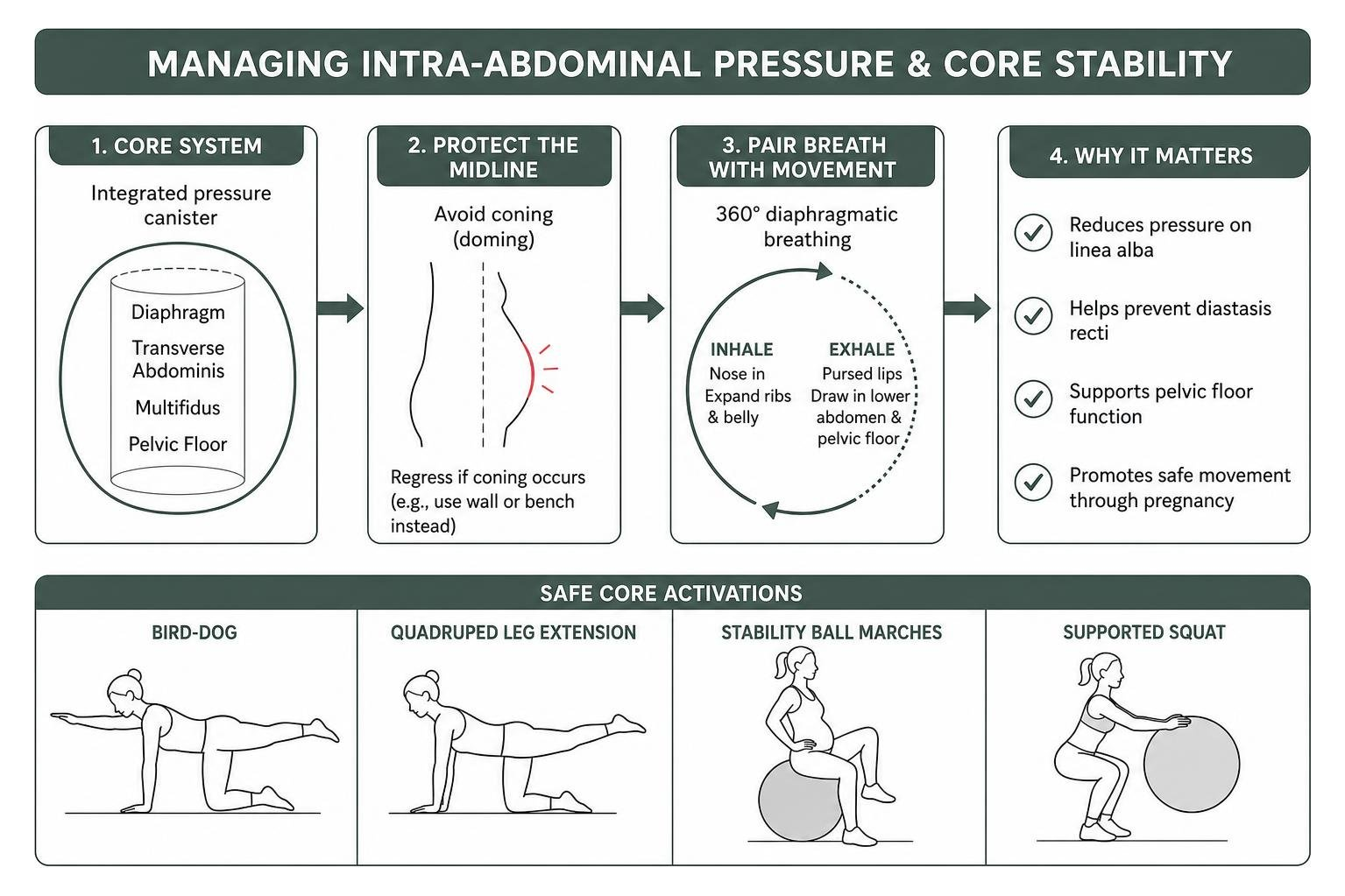
Watch for "coning" or "doming"—a visible ridge protruding along the midline of your belly during movement. If you see coning during a plank or pushup, regress the exercise to an elevated surface like a wall or bench.
Pairing breath with movement protects these deep tissues. Practice 360-degree diaphragmatic breathing: inhale through your nose to expand your ribs and belly, then exhale gently through pursed lips while drawing your lower abdomen and pelvic floor upward. Gentle core movements like bird-dogs, quadruped leg extensions, and stability ball marches engage the deep transverse abdominis safely.
Understanding Pelvic Floor Chiropractic: The Connection Most Moms Don't Know About is key to pelvic health, as proper sacral and pelvic bone alignment allows pelvic floor muscles to contract and relax efficiently. These foundational patterns also establish a clear roadmap for How to Rebuild Core Strength Safely After Pregnancy.
Clinical Red Flags and Protocols: Safe Movement & Exercise by Trimester Safety Check
Always listen to your body's feedback. Adhering to Exercise During Pregnancy clinical guidelines means recognizing when to rest. Stop exercising immediately and contact your prenatal care provider if you experience any of the following warning signs:
- Vaginal bleeding or amniotic fluid leakage
- Dizziness, lightheadedness, or feeling faint
- Chest pain, rapid heartbeat, or sudden shortness of breath before exertion
- Regular, painful uterine contractions that do not subside with rest
- Severe headache or calf pain and localized swelling
Integrating regular exercise with the Benefits of Prenatal Chiropractic Care helps ensure your pelvis, hips, and spine adapt comfortably to each stage of pregnancy. Utilizing gentle, specialized protocols like Webster Technique 101 balances pelvic muscles and ligaments, reducing intrauterine tension and supporting natural birth preparation.
At Magnolia Chiropractic, we walk alongside growing families from pregnancy into postpartum life. Just as prenatal alignment supports a smoother pregnancy and birth, gentle pediatric chiropractic care helps infants navigate essential developmental milestones like tummy time, crawling, and walking with balanced spinal mechanics.
If you are looking for dedicated prenatal support in the OKC metro area, connect with our team at Prenatal Chiropractor Norman OK to keep your body balanced, comfortable, and moving safely through every trimester.
