
Why Glute Strength Matters During Pregnancy
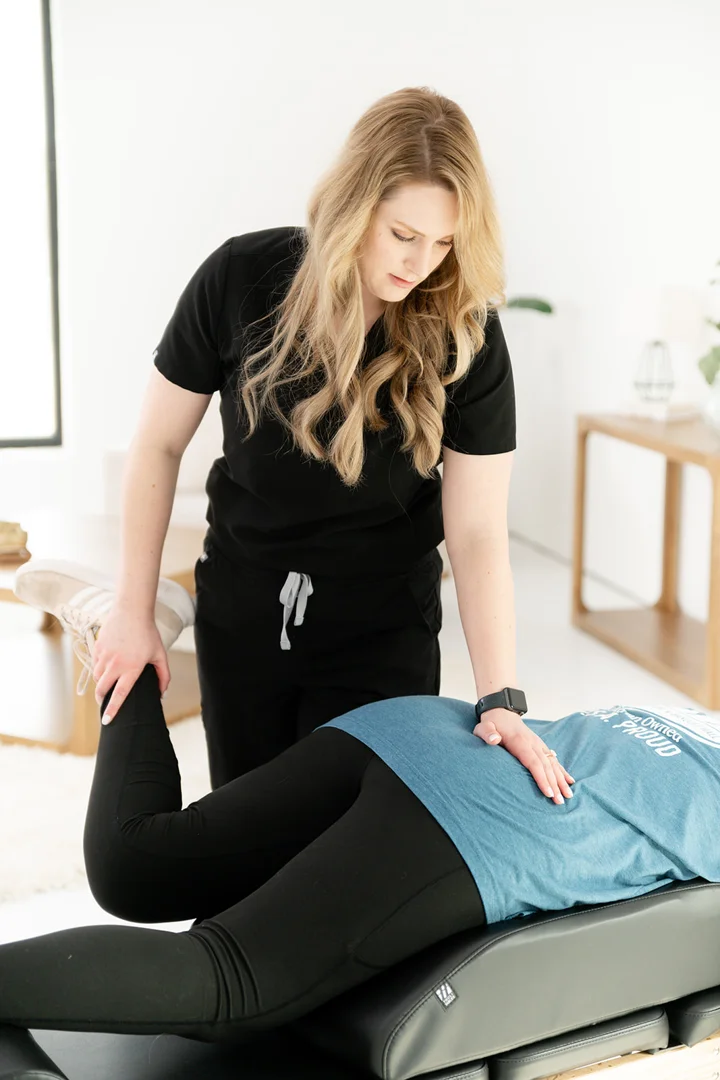
Strong glutes help steady your pelvis as your belly grows and your balance changes. They support everyday movements like walking, climbing stairs, and getting up from a chair. That's Why Your Glutes Matter More Than You Think During Pregnancy: glute strength can help you move more comfortably, though it is not a cure for back or pelvic pain.
I'm Leah Bagg, a chiropractor in Norman, Oklahoma, with additional training through the ICPA and Spinning Babies. In Why Your Glutes Matter More Than You Think During Pregnancy, I'll explain how these muscles support your changing body, starting with your pelvis and spine.
Why Your Glutes Matter More Than You Think During Pregnancy for Pelvic and Spinal Stability
As pregnancy progresses, your growing baby shifts your center of gravity forward and downward. To keep you upright, your body naturally adapts, often tilting the pelvis forward into what clinicians call anterior pelvic tilt. While this is an intelligent short-term compensation, an unchecked forward tilt places extra strain on the lumbar spine and stretches abdominal tissues.
Your gluteal complex—consisting of the gluteus maximus, gluteus medius, and gluteus minimus—serves as the primary anchor against this forward pull. The gluteus maximus works to extend the hip and pull the pelvis back toward neutral alignment, while the gluteus medius stabilizes the pelvis horizontally whenever you step, walk, or balance on one leg.
Throughout pregnancy, the hormone relaxin softens ligaments across the body to prepare the pelvis for birth. Because ligaments become more pliable, your joints rely much more heavily on active muscular support. According to the Physical Activity Guidelines for Pregnant and Postpartum Women, regular physical activity supports musculoskeletal health and healthy gestational weight management. When your glutes are strong and firing properly, they take over the job of stabilizing your sacroiliac (SI) joints and sacrum, protecting you from excessive joint shear.
Relieving Common Pregnancy Aches: Why Your Glutes Matter More Than You Think During Pregnancy
When the glutes are underactive, surrounding muscles are forced to overwork. The lower back extensors, hip flexors, and deep hip rotators often step in to create artificial stability, leading to chronic tension, trigger points, and achiness.
Targeted glute strengthening provides direct relief across several frequent prenatal complaints:
- Low Back Strain: Activating the glutes unloads the lumbar spine, offering gentle pregnancy-related back pain relief as posture shifts.
- Sacroiliac Joint Discomfort: Strong gluteal fibers cross the back of the pelvis, acting as a dynamic brace to manage SI joint and pelvic girdle pain.
- Pubic Symphysis Strain: Balanced strength between the gluteals and adductors helps stabilize the anterior pelvis, aiding in pubic symphysis dysfunction management.
- Sciatic Nerve Tension: When the larger gluteus maximus is weak, the deeper piriformis muscle can become tight and overworked, irritating the underlying sciatic nerve. Building true gluteal strength allows these deep rotators to relax.
The Core Canister, Pelvic Floor, and the Surprising Foot Connection
Your body manages pressure through an integrated system known as the "core canister." The diaphragm forms the roof, the abdominal wall wraps around the sides, the spinal stabilizers support the back, and the pelvic floor serves as the muscular base.
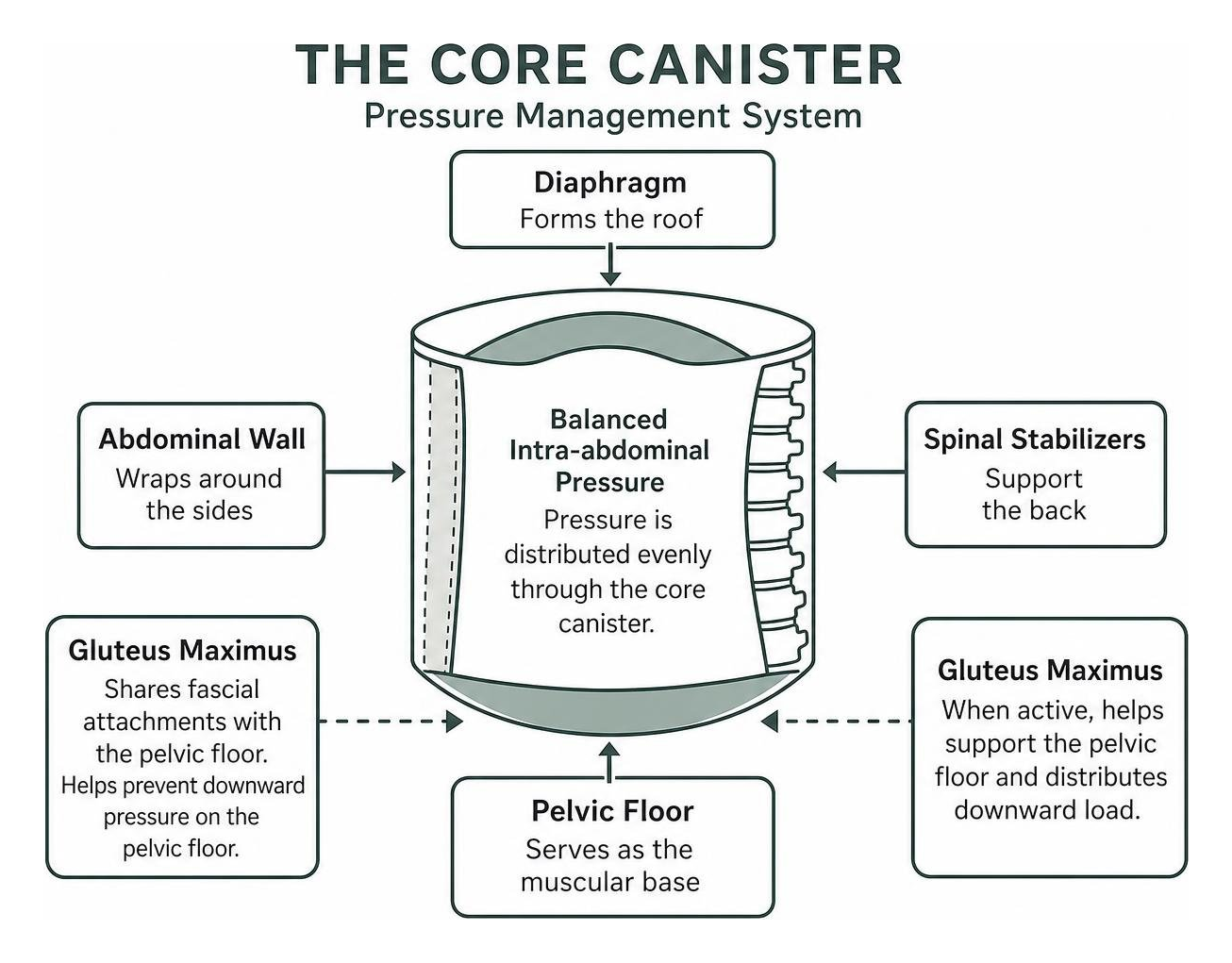
Understanding the pelvic floor and core connection reveals why glutes matter so much for pelvic health. The gluteus maximus shares fascial attachments with the pelvic floor. When the glutes are active, they prevent the pelvic floor from bearing the full downward load of the expanding uterus alone. This coordination ensures that intra-abdominal pressure is distributed evenly rather than bearing straight down on the pelvic bowl.
Interestingly, this stabilization chain starts at your feet:
- The Tripod Foot: Your foot establishes contact through three key points: the base of the big toe, the base of the little toe, and the center of the heel.
- Arch Support and Pronation: Relaxin affects the connective tissues of the feet just as it does the pelvis. Collapsed arches or excessive pronation rotate the lower leg inward.
- Fascial Continuity: Internal rotation of the tibia directly impacts hip internal rotation and pelvic positioning, making it harder for the gluteus medius and maximus to fire.
- Sensory Feedback: Practicing barefoot mobility drills or simple grounding exercises restores proprioception, ensuring that every step sends clean muscular signals up through your calves, glutes, and pelvic floor.
Actionable Strategies: Safe Glute Training, Labor Preparation, and Postpartum Recovery
You do not need heavy gym machinery to build functional strength during pregnancy. In fact, research into the Benefits of Resistance Training During Pregnancy demonstrates that moderate-intensity resistance exercise improves muscular endurance, aids blood sugar management, and supports maternal vitality without requiring extreme loads.
Focus on controlled repetitions, deep diaphragmatic breathing, and establishing a mindful connection with the muscles being worked.
Trimester-by-Trimester Exercise Adaptations: Why Your Glutes Matter More Than You Think During Pregnancy
As your body evolves, your workout routine should adapt to support joint comfort and balance. Here is how you can tailor safe movement by trimester:
| Trimester | Recommended Glute Exercises | Key Modifications & Focus |
|---|---|---|
| First Trimester | Bodyweight squats, Romanian deadlifts, standard glute bridges | Establish breath mechanics; focus on form and building consistent movement habits. |
| Second Trimester | Lateral band walks, elevated glute bridges, reverse lunges | Incline upper body slightly during bridges; avoid holding your breath (Valsalva). |
| Third Trimester | Side-lying clamshells, seated band abductions, supported wall squats | Prioritize pelvic symmetry; use pillows or wedges for side-lying; avoid flat supine exercises. |
When performing these exercises, pair movement with your breath: exhale on the exertion (such as standing up from a squat or lifting into a bridge) to gently lift the pelvic floor and engage the deep core, and inhale to expand the ribcage and fully relax the muscles.
Preparing for Labor, Delivery, and Postpartum Recovery
Glute strength plays an active role during labor. Strong hips and glutes give you the stamina required for active birthing positions, such as hands-and-knees, deep squatting, or side-lying with support. These positions help optimize pelvic outlet diameter, giving your baby more space to navigate the birth canal and potentially shortening labor and delivery time.
After birth, gentle glute re-education is equally essential for long-term healing, whether supporting c-section and postpartum recovery or recovering from a vaginal delivery:
- Early Days (Days 1–14): Focus on resting, diaphragmatic breathing, and gentle isometric glute squeezes in bed to maintain neural pathways.
- Weeks 2–6: Introduce gentle side-lying clamshells and supine bridges with an elevated torso, listening carefully to your body's feedback.
- Beyond Week 6: Gradually reintroduce functional standing movements, such as sit-to-stands and bodyweight hinges, after receiving clearance from your healthcare provider.
Building a strong foundation during these early postpartum stages also sets the stage for family wellness. As your baby grows and reaches developmental milestones like tummy time, crawling, and eventually walking, having stable hips and a resilient posterior chain makes lifting, carrying, and keeping up with your little one much easier on your spine.
When to Seek Professional Support and Prenatal Care
While strengthening your glutes at home is incredibly beneficial, some symptoms indicate that your pelvis, spine, or pelvic floor need individualized clinical assessment.
Contact a healthcare provider or pelvic health professional if you experience:
- Persistent, sharp, or catching pain in the pubic bone or tailbone
- Unresolved numbness, tingling, or shooting nerve pain down the leg
- Feelings of pelvic heaviness, bulging, or pressure consistent with pelvic organ descent
- Noticeable abdominal doming or coning along the midline (diastasis recti) during movement
- Involuntary leaking of urine when sneezing, coughing, or exercising
- Difficulty walking or bearing weight evenly on both legs
At Magnolia Chiropractic, we focus on gentle, patient-centered techniques tailored to your body's changing structural needs. If you are seeking individualized support in Norman, Oklahoma, working with an experienced prenatal chiropractor in Norman OK can help restore balanced joint mechanics, relieve tension, and ensure you feel strong and supported throughout your entire journey into motherhood.
