
Why Your Body Responds Differently in a Second or Third Pregnancy
Anatomical and Neurological Shifts: Second (or Third) Pregnancy: Why Your Body Responds Differently
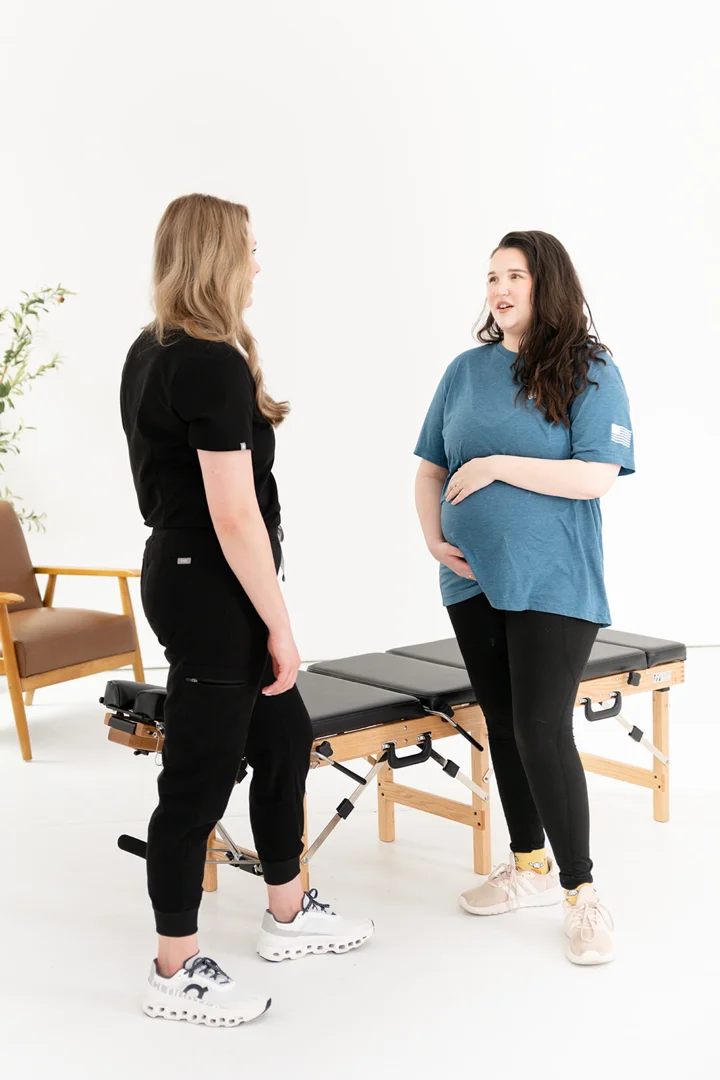
When you step into a subsequent pregnancy, your body does not start from a blank slate. Connective tissues, hormonal sensitivity, and neuromuscular pathways carry over the adaptations from your previous births. During a first pregnancy, the body creates entirely new pathways, stretching muscle fibers and remodeling glandular tissue. In later pregnancies, the body responds rapidly to early surges of relaxin and progesterone.
The rectus abdominis muscles and surrounding fascia yield much sooner because they have previously expanded. This natural elasticity explains why many women notice a visible bump as early as the first trimester—often by 12 to 14 weeks—rather than the 20 weeks typical of a first gestation. While this mechanical readiness accommodates the growing baby comfortably, it also shifts your center of gravity forward earlier in the gestational timeline.
| Physiological / Neurological Marker | First Pregnancy | Second or Third Pregnancy |
|---|---|---|
| Abdominal Muscle Resistance | Higher baseline tension; slower stretching | Pre-stretched connective tissue; yields earlier |
| Visible Bump Appearance | Typically noticeable around weeks 18–20 | Often visible by weeks 12–14 |
| Perception of Movement (Quickening) | Usually recognized between 18–20 weeks | Recognized earlier, often by 13–16 weeks |
| Pelvic & Joint Mobility | Moderate laxity responding to relaxin | Faster ligament yield; higher joint vulnerability |
| Primary Brain Network Adaptation | Stronger shifts in Default Mode Network | Stronger shifts in Dorsal Attention & Somatomotor Networks |
| Average Active Labor Duration | 8 to 18 hours (cervical dilation) | 5 to 12 hours (cervical dilation) |
| Postpartum Afterpains (Involution) | Mild to moderate cramping | Significantly more intense cramping |
Musculoskeletal Changes in a Second (or Third) Pregnancy
As documented in clinical guides on pregnancy stages and changes, physical adaptations evolve across trimesters. In later pregnancies, the earlier loosening of the abdominal wall means your belly often carries lower. While carrying lower can provide welcome breathing room beneath the diaphragm and ease early rib compression, it transfers additional mechanical load onto the pelvis, pubic bone, and lower spine.
This altered biomechanics frequently leads to earlier onset of pregnancy-related back pain and sacroiliac joint instability. The supportive pelvic ligaments—including the broad and round ligaments—yield more readily under load. When these tissues stretch unevenly, sharp spasms or round ligament pain can occur during simple movements like rolling over in bed or standing up from a chair.
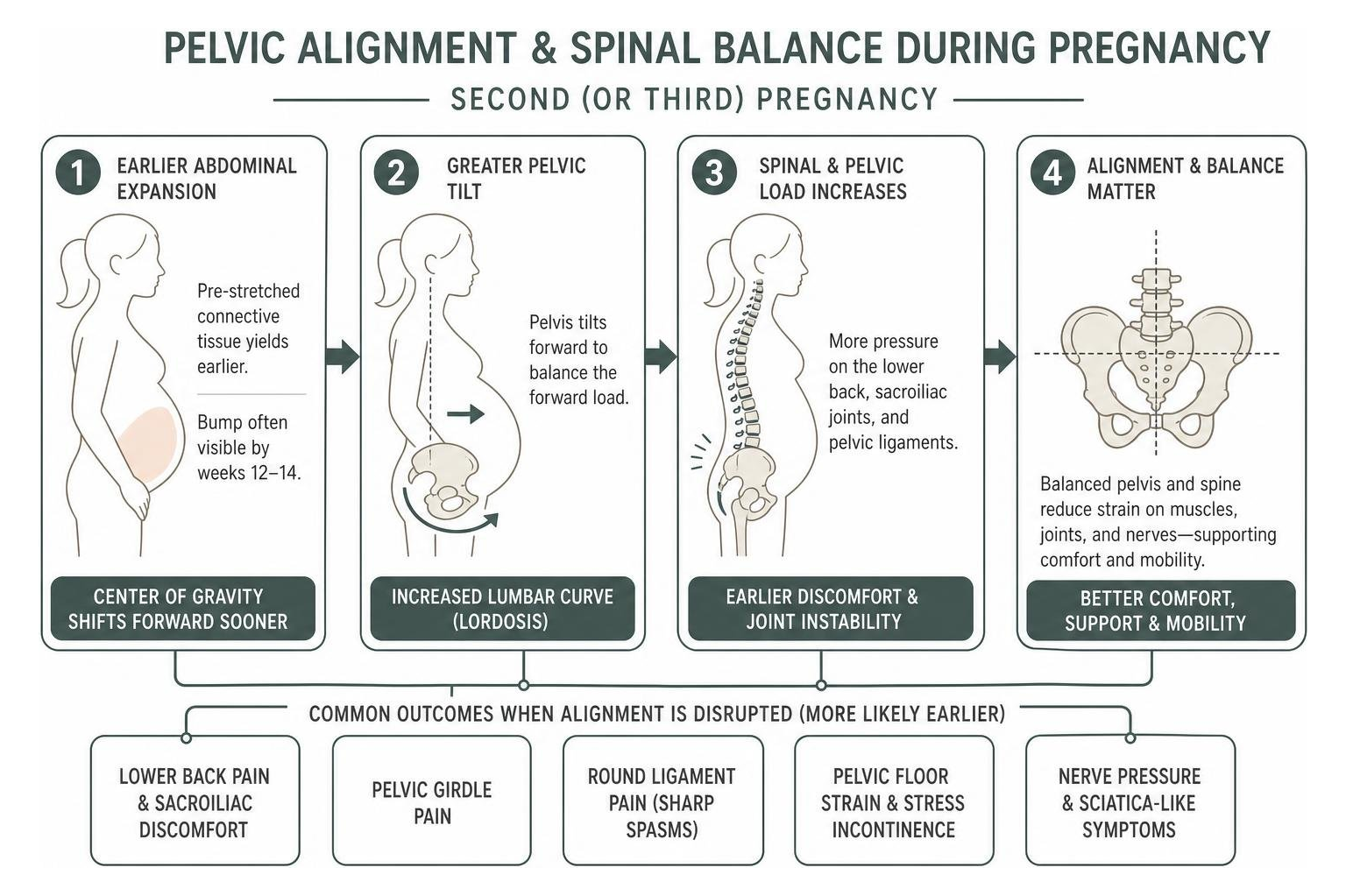
Furthermore, the pelvic floor muscles have already experienced prior birth strain. Without targeted pelvic support, many mothers notice an earlier onset of pelvic girdle discomfort or mild stress incontinence when coughing, sneezing, or lifting. Exploring pelvic floor chiropractic can help balance the bony pelvis and relieve undue tension on surrounding soft tissues. This structural balance is equally vital if nerve pressure develops, as addressing pelvic torsion often helps ease the shooting discomfort associated with sciatica in pregnancy.
Neurological Adaptations in a Second (or Third) Pregnancy
Pregnancy-related changes are not confined to muscles and joints; your central nervous system undergoes profound remodeling. Landmark scientific research on maternal brain adaptations demonstrates that maternal neuroplasticity differs distinctly between a first and subsequent pregnancy. While first pregnancies primarily alter the default mode network—a network tied to self-reflection and social cognition—second pregnancies produce more pronounced structural changes within the somatomotor and dorsal attention networks.
These brain networks govern sensory processing, motor coordination, and external spatial awareness. Second-time mothers demonstrate an average 2.8% reduction in cortical gray matter volume, reflecting specialized neural pruning that sharpens maternal responsiveness. In fact, advanced neuroimaging can classify whether a woman is in her first or second pregnancy with 80% accuracy based purely on volumetric patterns.
This neural restructuring supports quick responsiveness to an infant while concurrently tracking the safety of an older child. Because hormonal and neurological fluctuations are significant, perinatal mental health remains a vital consideration. Approximately 15% of women experience depression or anxiety during pregnancy. Neurobiological shifts highlight that emotional fluctuations are physiological realities, reinforcing the importance of regular clinical check-ins and open communication with your care team.
Fatigue, Toddler Lifting, and Emotional Demands
Managing a pregnancy while parenting one or more young children introduces unique daily demands. Clinical midwifery insights on second pregnancy differences consistently emphasize that fatigue in later pregnancies is compounded by active caregiving. You can rarely "sleep when the baby sleeps" when an older toddler needs supervision, meals, and attention.
Nutritional demands are also distinct. If the interval between pregnancies is under 18 months, maternal nutrient reserves—such as iron, calcium, and folate—may still be replenishing. Paired with the repetitive physical strain of lifting toddlers, diaper changes, and car seat logistics, the musculoskeletal system experiences continuous stress. Utilizing safe pregnancy chiropractic adjustments offers a gentle way to support spinal alignment and ease tension while keeping your body resilient.
Labor Progression, Postpartum Recovery, and Practical Support for Experienced Mothers

Experienced mothers often find that labor unfolds along a different timeline. While every birth is unique, multiparity generally brings faster cervical changes and shorter active labor phases. However, because each pregnancy presents unique considerations, maintaining routine prenatal visits remains essential. Collaborating with local medical resources, such as Norman Regional obstetrical care, alongside your birth support network ensures comprehensive care. If you are coordinating with doulas, lactation consultants, and bodyworkers, our guide to Building Your Norman Birth Team outlines practical steps to establish cohesive community support.
Accelerated Labor Dynamics and Cervical Effacement
The muscular and connective tissues of the cervix and pelvic floor have expanded during prior deliveries, meaning they offer less mechanical resistance. Active labor—the stage where the cervix dilates from 6 to 10 centimeters—is typically about half as long in subsequent labors compared to first births, often averaging between 5 and 12 hours overall. Cervical effacement and mild dilation may even begin days or weeks before true labor starts.
Ensuring optimal pelvic balance helps facilitate smooth fetal positioning. Prenatal care utilizing the Webster Technique focuses on balancing the pelvic bones, sacrum, and surrounding ligaments, reducing intrauterine torsion. Understanding how chiropractic care may help shorten labor and delivery time gives mothers practical tools to support pelvic biomechanics and encourage comfortable progression. Because later labors can advance rapidly, creating a clear logistical plan for transit and childcare is an important preparation step.
Postpartum Afterpains, Core Recovery, and Pelvic Floor Rehabilitation
Following delivery, many mothers are surprised by the intensity of postpartum afterpains. After a first birth, the uterine muscle maintains some baseline tone while slowly contracting down. In a second or third pregnancy, the stretched uterine fibers must contract much more forcefully to return to their pre-pregnancy size. These contractions are particularly noticeable during breastfeeding, when surges of natural oxytocin stimulate the uterus to clamp down. Warm compresses, comfortable positioning, and restful breathing help manage these normal physiological cramps over the first few days.
Long-term recovery also involves restoring foundational core and pelvic stability. Rebuilding your deep transverse abdominis and pelvic floor muscles requires a progressive approach. Learning how to rebuild core strength safely after pregnancy prevents worsening any lingering abdominal separation and protects the lower spine.
Integrating chiropractic care for postpartum recovery helps realign the pelvis and spine as relaxin levels decline, easing the strain of carrying your newborn and older children. Supporting family wellness also extends naturally to your little ones; gentle pediatric chiropractic care supports infants and toddlers as they navigate developmental milestones like head control, rolling, crawling, and walking, ensuring symmetrical joint movement and nervous system function as they grow.
At Magnolia Chiropractic, we provide evidence-based, gentle prenatal and postpartum care tailored to your family's needs. If you are navigating a subsequent pregnancy in Norman, OK, or the greater OKC metro area, partnering with a trusted prenatal chiropractor in Norman, OK can help you feel comfortable, aligned, and fully supported through every stage of your motherhood journey.
