
Why Building Your Norman Birth Team the Right Way Matters

Building your Norman birth team: doulas, IBCLCs, and who else belongs in your corner is one of the most important — and most overlooked — decisions you'll make during pregnancy. The right team around you can shape not just your birth experience, but your recovery, your baby's start, and your confidence as a parent.
Quick answer: Who belongs on your Norman birth team?
- OB-GYN or Midwife — Your primary medical provider for clinical care and delivery
- Birth Doula — Non-medical continuous physical and emotional support during labor
- Postpartum Doula — Support at home after birth with newborn care and recovery
- IBCLC (Lactation Consultant) — Expert guidance for breastfeeding from day one
- Pelvic Floor Physical Therapist — Addresses pregnancy discomfort and postpartum recovery
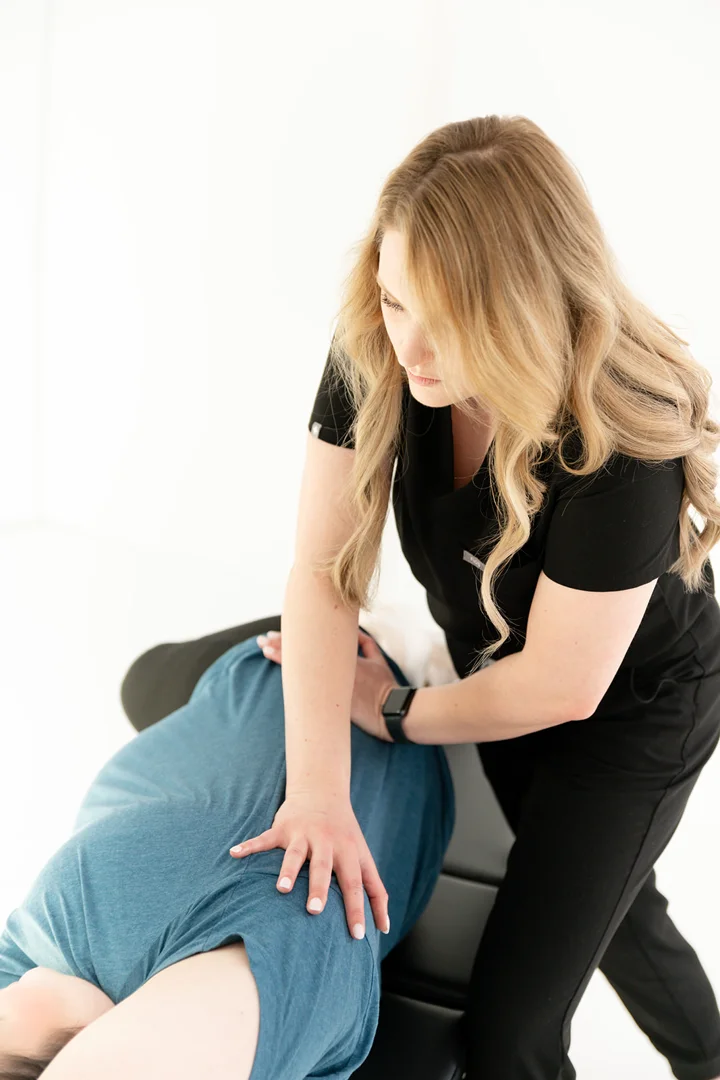
- Prenatal Chiropractor — Supports pelvic alignment, nervous system function, and fetal positioning
- Pediatrician — Baby's medical provider from birth onward
- Partner or Trusted Support Person — Emotional anchor and active participant throughout
Most families spend more time choosing a stroller than choosing their birth team. Yet research consistently shows that continuous, personalized support leads to shorter labors, fewer interventions, and greater satisfaction — for both the birthing person and their partner.
This guide walks you through every role, when to hire each person, and how to build a team that truly fits your needs and values right here in Norman.
I'm Dr. Leah Bagg, a chiropractor based in Norman with specialized training through the ICPA and Spinning Babies, and I'm passionate about supporting families through pregnancy, birth, and beyond. As a member of many Norman families' birth teams, I've seen how building your Norman birth team with doulas, IBCLCs, and the right support people in your corner transforms the entire experience — and I'm here to help you do exactly that.
Building Your Norman Birth Team: Doulas, IBCLCs, and Who Else Belongs in Your Corner
Assembling your support network is like laying the foundation for a home. Each professional brings a unique set of skills designed to support your physical safety, emotional well-being, and structural alignment.
When building your Norman birth team: doulas, IBCLCs, and who else belongs in your corner, it helps to understand how these roles differ and collaborate. A common mistake is assuming one role replaces another. In reality, clinical providers, physical therapists, doulas, and prenatal chiropractors work hand-in-hand to provide comprehensive, wrap-around care.
To help you visualize how these pieces fit together, here is a quick breakdown of the core support roles you might consider as you learn how to set up a birth support team: your guide:
| Role | Scope of Practice | Clinical vs. Non-Clinical | Primary Benefit |
|---|---|---|---|
| OB-GYN / Midwife | Medical management, clinical assessments, and delivery. | Clinical | Ensures medical safety of parent and baby. |
| Birth Doula | Continuous physical comfort, emotional encouragement, and advocacy during labor. | Non-Clinical | Lowers medical intervention rates; empowers partners. |
| Prenatal Chiropractor | Neuro-musculoskeletal alignment, pelvic balance, and nervous system support. | Clinical (Specialized) | Eases pregnancy aches, optimizes fetal positioning, and supports smoother labor. |
| IBCLC | Clinical lactation support, latch assessment, and feeding troubleshooting. | Clinical (Specialized) | Resolves complex feeding challenges and builds feeding confidence. |
| Postpartum Doula | In-home recovery support, light household help, and newborn care education. | Non-Clinical | Eases the transition into parenthood and reduces postpartum depletion. |
| Pelvic Floor PT | Rehabilitation of pelvic floor muscles, core integration, and perineal prep. | Clinical | Prevents or treats incontinence and assists postpartum core recovery. |
The Role of Birth Doulas: Supporting Partners and Enhancing Outcomes
A birth doula is a trained professional who provides continuous physical, emotional, and educational support to families before, during, and immediately after childbirth. One of the most common questions partners ask is, "Will a doula replace my role during birth?"
The answer is a resounding no. A skilled doula does not take the partner's place; instead, they empower the partner to be as involved as they wish to be. Doulas guide partners on comfort measures like hip squeezes and allow partners to take necessary breaks without leaving the birthing person alone. In fact, 93% of fathers who had doula support during labor rated their birth experience as "very positive."
The evidence-based benefits of continuous doula support are remarkable. Clinical data shows that having a doula present is associated with:
- A 39% decrease in the risk of cesarean birth
- A 15% increase in the likelihood of a spontaneous vaginal birth
- A 10% decrease in the use of regional pain medications (like epidurals)
- Shorter labors by an average of 40 minutes or more
- A 4x lower risk of the baby having a low birth weight
Doulas improve birth outcomes by focusing solely on your comfort and emotional safety, bringing a grounding, calm energy to the birth space. If you are looking to connect with certified professionals in our area, you can search for trusted local support through Find a Doula Near Me in Norman, OK.
Why You Need a Doula Even with a Midwife or OB-GYN
It is common to wonder why a doula is necessary if you have already hired a highly supportive midwife or OB-GYN. The distinction lies in the difference between clinical care and continuous labor support.
Your midwife or OB-GYN is responsible for the medical safety of you and your baby. They monitor vitals, perform clinical assessments, manage complications, and handle the delivery. Because of these clinical responsibilities, and because they often manage multiple patients at once in a hospital setting, they cannot remain in your room continuously throughout your labor. Nurses also rotate shifts and spend a significant portion of their time charting.
A doula has no clinical duties. They do not perform cervical checks, monitor fetal heart rates, or give medical advice. Instead, they remain by your side continuously from the moment you request their presence until after your baby is born. They help you navigate hospital procedures, hold space for your decisions, and provide physical comfort measures like counterpressure and position suggestions. Whether you are planning a delivery at birth centers, a home birth, or utilizing the Pregnancy & Childbirth Services in Norman, OK at Norman Regional, a doula acts as a bridge, ensuring you feel heard, respected, and physically supported.
Building Your Norman Birth Team: Doulas, IBCLCs, and Who Else Belongs in Your Corner for Lactation Support
While preparing for labor is essential, planning for what happens once your baby is in your arms is just as critical. Many families assume that breastfeeding will come naturally, only to find themselves overwhelmed by latch difficulties, nipple pain, or supply concerns in the early days postpartum.
An International Board Certified Lactation Consultant (IBCLC) is the gold standard for feeding support. While hospital nurses and postpartum doulas can offer general feeding guidance, an IBCLC is a clinically trained specialist dedicated entirely to complex feeding dynamics. Meeting with an IBCLC prenatally allows you to create a personalized feeding plan, discuss any anatomical considerations, and establish a trusted contact before your baby arrives.
Postpartum recovery is a multi-faceted process. As you heal, your structural alignment and nervous system also require gentle attention to help you adapt to the physical demands of feeding and carrying your newborn. Integrating targeted care, such as Chiropractic Care Postpartum Recovery, helps restore pelvic balance, relieves neck and shoulder tension from feeding, and supports your body's natural healing capacity during the fourth trimester.
Building Your Norman Birth Team: Doulas, IBCLCs, and Who Else Belongs in Your Corner for Physical Alignment
Your physical structure plays a massive role in how you experience pregnancy and how your labor progresses. During pregnancy, your body releases the hormone relaxin, which softens ligaments to allow your pelvis to expand. While necessary, this increased joint mobility—combined with a shifting center of gravity—often leads to pelvic misalignment, muscle tension, and nerve irritation.
This is where specialized prenatal chiropractic care becomes an invaluable asset to your birth team.
By focusing on pelvic balance and nervous system function, gentle chiropractic care helps prepare your body for an efficient labor. Specifically, we utilize the Webster Technique—a specific chiropractic analysis and gentle adjustment that reduces interference to the nervous system and balances the pelvic muscles and ligaments.
When the pelvis is aligned, the uterus has optimal support, which can help the baby find the best possible position for birth. The benefits of this structural care are profound:
- Easing common discomforts by addressing pregnancy related back pain
- Relieving uncomfortable pressure, including rib pain in the third trimester
- Creating pelvic balance, as detailed in our guide on the benefits of prenatal chiropractic care
- Utilizing specialized protocols explained in Webster Technique 101
Additionally, studies show that maintaining proper pelvic alignment may play a key role in labor efficiency. To understand how structural balance supports the birth process, explore how chiropractic care may help shorten labor and delivery time.
For comprehensive pelvic health, we also highly recommend including a pelvic floor physical therapist on your team. While chiropractic care ensures the bony pelvis is aligned and the nervous system is clear, a pelvic floor PT helps coordinate, strengthen, and relax the deep pelvic muscles. This combined approach addresses the structural connection that many mothers are unaware of, which you can read about in Pelvic Floor Chiropractic: The Connection Most Moms Don't Know About.
A Week-by-Week Timeline for Assembling Your Support
Building your team gradually helps prevent overwhelm and ensures you secure the providers who align best with your values. Excellent local providers—especially doulas and specialized chiropractors—often book out months in advance.

To help you organize your search, we recommend following a structured timeline, similar to the steps outlined in How to Build Your Birthing Team: A Week-by-Week Guide:
- Weeks 4–8: Choose Your Primary Medical Provider
Decide whether an OB-GYN or a midwife fits your medical needs and desired birth setting. - Weeks 9–12: Gather Information & Research
Begin researching local birth philosophies, birth settings, and support options in the Norman and OKC metro areas. - Weeks 13–20: Hire Your Birth Doula
Interview multiple doulas to find someone whose energy, experience, and communication style feel safe and grounding to you and your partner. - Weeks 18–24: Align Your Body
Establish care with a prenatal chiropractor and a pelvic floor physical therapist to support your changing posture and prepare your pelvis for birth. - Weeks 24–28: Plan for Feeding
Schedule a prenatal consultation with an IBCLC to build feeding confidence and discuss any potential anatomical or physiological considerations. - Weeks 28–32: Build Your Postpartum Support Team
Line up a postpartum doula, organize family support, set up a meal train, and prepare a plan for physical recovery at home. - Weeks 32–36: Select a Pediatrician
Interview and select a pediatrician who respects your family's wellness values and approach to care. - Weeks 36–40: Finalize and Review
Review your birth preferences, run through labor day roles with your team, and ensure your backup plans are clear.
Questions to Ask When Interviewing Providers
To ensure your team is aligned with your birth vision, consider asking potential doulas, midwives, or OBs these questions during your consultations:
- What is your philosophy on medical interventions, inductions, and physiological birth?
- How do you support partners and help them feel involved in the birth space?
- What is your protocol if my birth plan needs to change, or if a medical transfer is necessary?
- How do you collaborate with other members of my birth team, such as chiropractors, doulas, or physical therapists?
How to Organize Roles and Navigate Changes on Labor Day
When labor begins, having clearly defined roles reduces stress and allows you to focus entirely on the physical work of birthing your baby.
Consider assigning specific tasks to your team members ahead of time:
- The Partner: Your emotional anchor. Their focus is on physical closeness, reassurance, and sharing this intimate journey with you.
- The Doula: Your physical and informational guide. They manage comfort measures, suggest position changes, keep you hydrated, and help translate medical options calmly.
- The Room Guardian: Responsible for protecting the birth environment—managing lighting, keeping the room quiet, and ensuring your birth preferences are respected.
- The Primary Communicator: A designated family member or friend who handles text updates to loved ones so your inner circle in the birth room can remain fully present.
Flexibility is one of your most powerful tools. Just as you might adjust plans when remodeling a house, you must give yourself permission to adapt your birth plan as your labor unfolds. If circumstances shift and medical interventions become necessary, it is not a failure.
By framing your birth preparation with room for flexibility, as discussed in Building Your Birth Vision, Team, and “Plan” Like Your Dream Home, you can make informed decisions from a place of safety and empowerment rather than fear or disappointment.
Bringing It All Together: Your Next Steps for a Supported Birth
Building your Norman birth team: doulas, IBCLCs, and who else belongs in your corner is about creating a circle of safety, trust, and physical comfort around your growing family. From the continuous emotional care of a birth doula to the specialized feeding guidance of an IBCLC, every person you invite into your space plays a vital role in your transition to parenthood.
At Magnolia Chiropractic, we are honored to walk alongside Norman families during this transformative season. Our patient-centered, gentle chiropractic care is tailored specifically to the unique needs of prenatal and postpartum mothers. We focus on restoring pelvic balance, calming the nervous system, and helping you feel strong and comfortable in your body.
Our care doesn't stop at birth. We also provide gentle pediatric chiropractic care to support your baby's nervous system and structural development as they meet important early milestones like lifting their head, rolling, crawling, and taking their first steps. If you are ready to rebuild your strength safely, you can also explore our guidance on how to rebuild core strength safely after pregnancy.
We would love to be a part of your supportive, family-centered team. To learn more about how we can support your journey, visit the Magnolia Chiropractic Home page to schedule your initial consultation today.
