
Why Bedwetting, Sleep, and the Nervous System Are More Connected Than Most Parents Realize
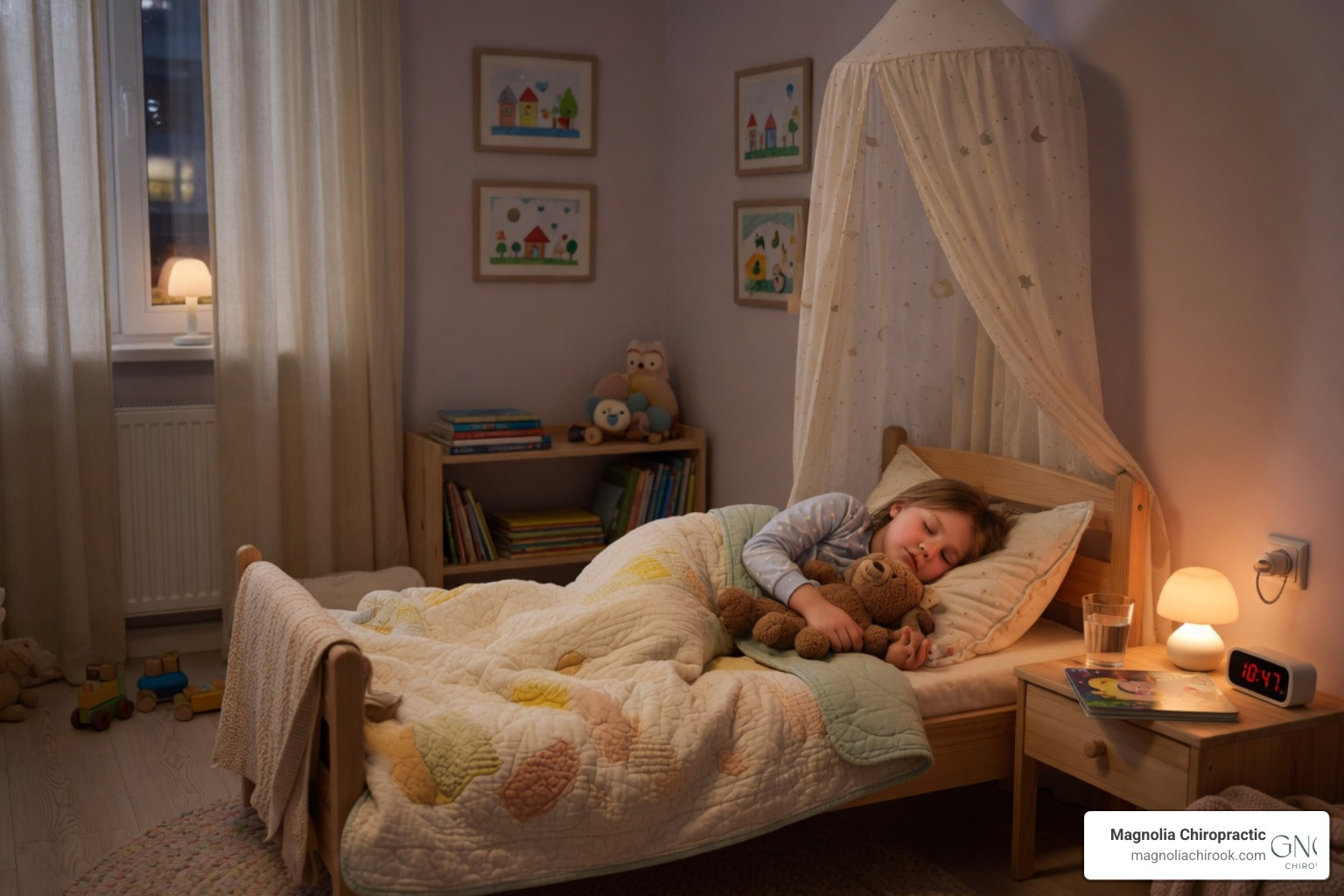
The link between bedwetting, sleep, and the nervous system is one of the most overlooked pieces of the puzzle for families dealing with nocturnal enuresis. If your child is still wetting the bed past the toddler years, you have probably heard some version of "don't worry, they'll grow out of it." And while that is sometimes true, it leaves a lot of parents without any real answers — or any sense of what to actually do in the meantime.
Here is a quick overview of the connection:
- Bedwetting is not a behavior problem. It is not caused by laziness, defiance, or poor parenting.
- The nervous system controls bladder function during sleep. The brain must detect a full bladder, send a signal to hold urine, and either wake the child or maintain sphincter control — all while asleep.
- Disruptions in that signaling chain — from spinal stress, airway issues, deep sleep pressure, or constipation — can prevent the brain and bladder from communicating clearly.
- Up to 25% of children experience occasional bedwetting, and 7–20% deal with it regularly.
- Several factors beyond deep sleep contribute, including arousal thresholds, REM sleep changes, airway dysfunction, and nervous system imbalance.
- Gentle, nervous-system-focused approaches — including chiropractic care — may support the body's ability to self-regulate these signals.
Bedwetting is common. But common does not mean there is nothing to explore. For many families, understanding the neurological side of the picture brings both clarity and relief.
I'm Dr. Leah Bagg, a chiropractor at Magnolia Chiropractic with specialized training in pediatric care through the ICPA, and supporting families navigating challenges like bedwetting, sleep, and the nervous system is a core part of the work I do every day. In the sections below, we will walk through the science in plain language so you can make informed, confident decisions for your child.
Bedwetting, Sleep, and the Nervous System: An Overlooked Connection
To understand why a child wets the bed, we have to look at how their body communicates while they are fast asleep. The process of staying dry through the night requires a complex, highly synchronized dance between the bladder, the spinal cord, and the brain. This entire process is run by the autonomic nervous system, which manages all of our involuntary bodily functions.
The autonomic nervous system is divided into two main branches:
- The Sympathetic Nervous System: Often called the "fight-or-flight" system, this branch handles stress, alertness, and high activity.
- The Parasympathetic Nervous System: Known as the "rest-and-digest" system, this branch is responsible for recovery, digestion, and relaxation.
During sleep, the parasympathetic system should ideally take the lead, allowing the body to rest deeply while the bladder coordinates with the brain. However, if a child's nervous system is stuck in a state of sympathetic overactivation (chronic stress or tension), this delicate balance is thrown off. When the body remains on high alert, it can disrupt the natural hormonal and neural pathways that govern nighttime bladder control.
This is why we focus so heavily on Common Signs Your Nervous System Is Out of Balance. If a child's body is constantly fighting to find equilibrium, developmental processes like nighttime bladder control can be delayed. For a deeper look at how these pathways interact, you can read more about The Health Docs on Bedwetting and Nerves.
How Neurological Balance Affects Nighttime Arousal
A common phrase parents hear is that their child is simply a "very deep sleeper." While sleep depth is certainly a factor, sleep physiology shows us that it is actually a question of arousal thresholds—the brain's ability to transition from a deep sleep state to wakefulness when a physical sensation (like a full bladder) occurs.
Research published in Acta Paediatrica on Sleep Arousal suggests that children who experience nocturnal enuresis do not necessarily have abnormal sleep patterns, but they do have significantly higher arousal thresholds. Essentially, the signal from the bladder is not strong enough to wake the brain up.
This communication relies on a specific pathway in the brain known as the PVT-NAc (paraventricular thalamus to nucleus accumbens) neural pathway, which helps coordinate sleep-to-wake transitions. Additionally, the pontine micturition center in the brainstem acts as the main switchboard for urination. If there is a delay or "noise" in this signaling chain, the brain fails to recognize the bladder's fullness in time.
Furthermore, sleep architecture plays a massive role. A study in Scientific Reports on REM Sleep Latency found a distinct relationship between prolonged REM sleep latency (the time it takes to enter the first dream state) and the frequency of bedwetting episodes. When sleep cycles are fragmented or delayed—often due to underlying stress, anxiety, or airway issues—it alters nighttime hormone secretion, leading to increased urine production and a heavier sleep state from which it is incredibly difficult to wake.
The Sacral Spine, Airway Health, and Sleep Quality
When looking at the physical pathways of bladder control, we must look at the sacral spine. The nerves that directly control the bladder and its sphincter muscles originate from the sacral plexus, specifically around the second sacral vertebra (S2).
In growing children, the sacrum is unique because it remains unfused and highly mobile well into adolescence. Because of this structural flexibility, physical stressors—such as falls, sports, or even early childhood developmental patterns—can cause minor structural shifts in the pelvis and lower spine. These shifts can create mechanical tension or "interference" along the sacral nerves, disrupting the clear flow of sensory messages from the bladder to the brain.
At the same time, we must consider what is happening at the other end of the spine: the airway. Sleep-disordered breathing, such as pediatric sleep apnea or chronic mouth breathing, is a leading cause of persistent bedwetting. When a child's airway collapses or is restricted during sleep, they have to work incredibly hard to breathe. This struggle creates intense negative pressure in the chest (intrathoracic pressure).
This pressure trickles down to affect the heart and kidneys, triggering the release of atrial natriuretic peptide—a hormone that tells the body to produce more urine. Simultaneously, the struggle to breathe repeatedly jolts the child out of restful sleep, leading to severe sleep fragmentation and preventing them from reaching the lighter sleep stages where waking up to use the bathroom is possible.
Understanding how these structural and respiratory systems interlock is a key focus of Family Spine Health Norman, where we look at the body as a whole rather than a collection of isolated symptoms.
Non-Behavioral Triggers: Constipation, Stress, and Airway Dysfunction
When a child struggles with bedwetting, we always look for three major non-behavioral triggers: constipation, stress, and airway dysfunction.
- Constipation: The bladder and the rectum sit right next to each other in the pelvis and share the exact same nerve pathways. When a child is constipated, a full rectum physically presses against the bladder, drastically reducing its holding capacity. This physical crowding also sends confused, constant sensory signals through the shared sacral nerves, making it difficult for the brain to read bladder fullness accurately.
- Chronic Stress: When a child is anxious or overstimulated, their nervous system shifts into a persistent fight-or-flight state. This chronic tension causes the pelvic floor muscles to tighten and become uncoordinated, making it much harder for the bladder to relax and fill normally.
- Airway Dysfunction: Mouth breathing, a low tongue posture, and swollen tonsils or adenoids disrupt the natural architecture of sleep. As explored in a Brain Sciences Study on Sleep Organization, disruptions in sleep organization and the orexinergic system (which regulates wakefulness) are closely linked to elimination disorders.
By keeping a close eye on these physical factors through checks like our Toddler Chiropractic Wellness Check, we can identify these structural and neurological stressors early in a child's development.
Understanding Supportive Care Options for Families
To help guide your family's journey, it is helpful to look at how different care models approach this common childhood challenge:
| Approach Type | Focus & Mechanism | Primary Strategies |
|---|---|---|
| Conventional Management | Managing symptoms and modifying behavior. | Moisture alarms, fluid restriction, medications (like desmopressin to reduce urine production). |
| Nervous System-Centered Care | Addressing the root communication pathways and structural stressors. | Gentle chiropractic adjustments to support sacral nerve function, pelvic floor support, airway evaluation, and stress reduction. |
When we assess a child from a chiropractic perspective, we are looking for "NeuroStructural Shifts"—subtle misalignments in the spine that can create tension in the nervous system. By gently restoring proper motion to the spine, particularly in the lower back and sacrum, we help clear the path for normal, healthy communication between the bladder and the brain. If you are curious about how this works, our guide on What is Pediatric Chiropractic offers a transparent, gentle introduction to our methods.
Gentle, Evidence-Informed Approaches for Family Wellness
As parents, we want to support our children in a way that feels safe, respectful, and aligned with their natural development. Rather than focusing on quick fixes or high-pressure tactics, our goal is to gently support the body's self-regulating mechanisms so it can achieve balance naturally.
This developmental support begins much earlier than the age of bedwetting. The physical milestones of infancy—such as crawling and walking—are actually vital stages of neurological wiring. As a baby moves, crawls, and eventually stands, they are actively shaping the curves of their spine and building the neural pathways that will later govern complex tasks like bladder control. Supporting spinal health during these milestones helps build a strong foundation for overall growth, as detailed in our Pediatric Chiropractic Benefits Complete Guide.
What the Research Says About Chiropractic Care for Enuresis
While we always maintain a realistic and honest perspective on pediatric care, clinical research offers some very encouraging insights into how chiropractic support can benefit children with nocturnal enuresis:
- The 1991 Prospective Study: In a study tracking 171 children experiencing bedwetting, the median number of wet nights per week dropped significantly from 7.0 down to 4.0 following a course of chiropractic care.
- The 1994 Controlled Trial: This trial found that 25% of children receiving chiropractic care experienced a 50% or greater reduction in wet-night frequency, compared to none in the control group.
- The 2009 Case Series: This series reported a 66.6% resolution rate of primary nocturnal enuresis within one year of utilizing a specific pediatric chiropractic protocol.
Gentle spinal manipulative therapy does not "cure" bedwetting; rather, it reduces mechanical stress on the sacral spine and pelvis. This supports the integrity of the bladder reflex pathways, allowing the nervous system to coordinate sleep and arousal more effectively. You can read more about these clinical observations in the Journal of Pediatric Neurology Study.
We believe that providing this type of supportive care is a vital part of Family Chiropractic Care, helping children navigate childhood challenges with comfort and confidence.
Practical Steps to Support Your Child's Nervous System and Sleep
If you are looking for gentle, practical ways to support your child's nervous system and sleep quality at home, here are a few supportive steps you can implement starting tonight:
- Establish a Calming Bedtime Routine: Spend the hour before bed winding down. Turn off bright screens, read a book together, or practice gentle belly breathing. This simple shift helps transition their nervous system from sympathetic (alert) to parasympathetic (restful) mode, relaxing the pelvic floor muscles.
- Practice Double Voiding: Have your child use the bathroom at the start of their bedtime routine, and then once more right before they close their eyes to sleep. This helps ensure the bladder is completely empty.
- Support Healthy Digestion: Since constipation is such a common trigger, focus on gentle hydration throughout the day and fiber-rich foods to keep their digestive tract moving freely.
- Eliminate Shame and Pressure: Reassure your child that their body is simply still learning how to communicate at night. Focus your encouragement on their effort and overall wellness rather than whether the bed is dry in the morning.
A Reassuring Resource in Norman, OK
At Magnolia Chiropractic, we understand that navigating bedwetting can feel isolating and overwhelming for both you and your child. We provide a warm, compassionate, and unhurried environment where we take the time to listen to your family's story, perform a thorough and gentle examination, and explain our findings clearly without any pressure.
If you are looking for a supportive partner in your child's wellness journey, we invite you to explore our Pediatric Chiropractor Norman OK page to schedule a pediatric consultation. Together, we can help support your child's nervous system, sleep, and overall health so your entire family can rest a little easier.
