
Common Causes of Hip Pain in Women: How to Tell What Might Be Hurting by Location
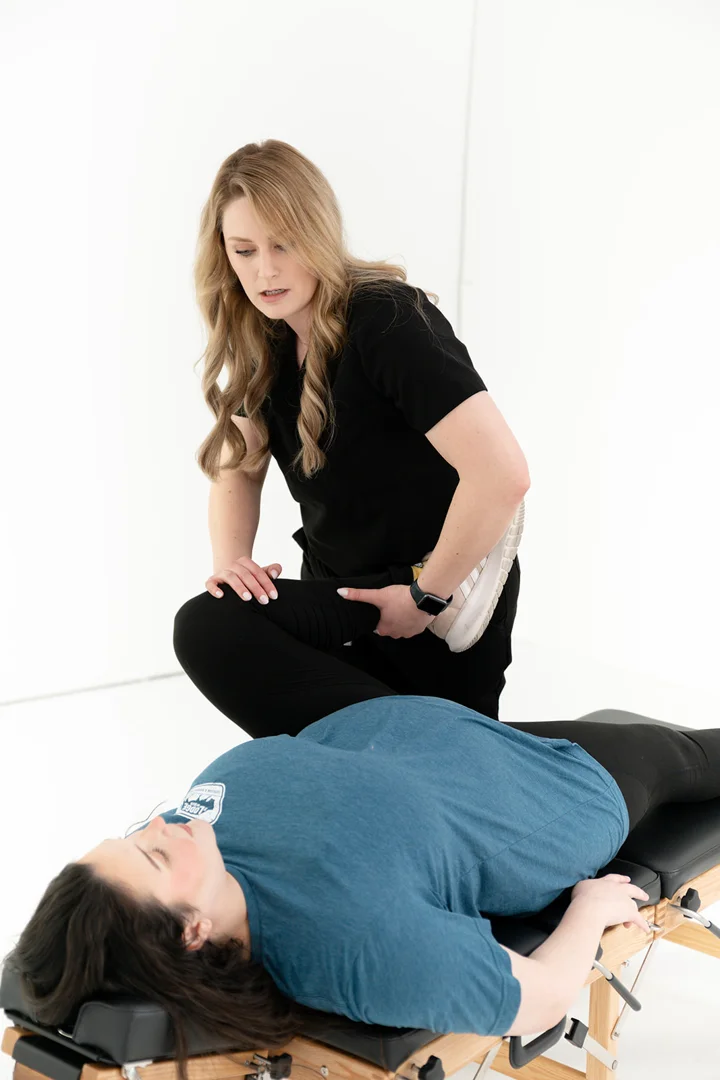
When evaluating female hip discomfort, anatomical nuance matters significantly. The female pelvis features a naturally wider design to accommodate childbirth, which increases the quadriceps angle (Q-angle). This anatomical reality subtly alters how mechanical forces travel across the femoral head, acetabular socket, and stabilizing soft tissues during everyday movement. Because of this interconnected structure, hip discomfort is rarely a generic complaint—it follows distinct patterns based on tissue depth and location.
| Pain Location | Common Conditions | Defining Symptoms | Key Aggravating Factors |
|---|---|---|---|
| Groin / Anterior Hip | Osteoarthritis, Labral Tear, FAI, Hip Dysplasia, Iliopsoas Tendinitis | Deep ache, catching sensations, pinching with deep flexion | Putting on socks/shoes, prolonged sitting, getting out of low cars |
| Lateral / Outer Hip | Greater Trochanteric Pain Syndrome, Gluteal Tendinopathy, Bursitis | Sharp or burning tenderness directly over the bony hip point | Lying on the affected side at night, climbing stairs, single-leg stance |
| Posterior / Buttock | Sacroiliac Joint Dysfunction, Lumbar Radiculopathy, Piriformis Syndrome | Aching gluteal pain, radiating nerve sensations down the leg | Rolling over in bed, transitional movements, prolonged static sitting |
Understanding where your symptoms originate allows for a much more thoughtful, targeted approach to restorative care rather than guessing with general stretches. For a broader overview of how joint mechanics influence discomfort, the hip is a useful starting point.
Groin and Anterior Joint Issues: Common Causes of Hip Pain in Women: How to Tell What Might Be Hurting
When discomfort concentrates deep in the groin or front crease of the hip, it frequently stems from the true ball-and-socket joint itself. The hip joint relies on a precise balance between the acetabular socket and the femoral head, lined by smooth articular cartilage and a stabilizing fibrocartilage ring called the labrum.
Several primary issues present as anterior hip pain:
- Hip Osteoarthritis: This represents the leading cause of deep joint pain in women over 50. As protective cartilage wears down over time, women often notice morning stiffness lasting 15 to 30 minutes, an audible or felt grinding sensation, and difficulty bending forward to tie shoes.
- Femoroacetabular Impingement (FAI) and Labral Tears: FAI occurs when subtle bone irregularities on the ball or socket cause friction during movement. Over time, repetitive deep hip flexion can irritate or tear the acetabular labrum. Women frequently describe a sharp "pinch" in the groin alongside mechanical catching or clicking when rising from deep chairs.
- Hip Dysplasia and Joint Hypermobility: Women are disproportionately diagnosed with developmental hip dysplasia, where a shallow socket fails to fully cover the femoral head. Natural ligament laxity and generalized joint hypermobility—both statistically more common in females—place elevated stress on the labrum and surrounding capsule. In many young or active women, this instability produces significant chronic groin discomfort even when standard X-rays appear normal.
- Iliopsoas Tendinitis: The deep hip flexor tendon glides over the front of the pelvis. Overuse, postural shifts, or repetitive kicking and running can cause localized inflammation, often accompanied by a distinct, painless or tender internal snapping sound.
Outer Hip and Gluteal Conditions: Common Causes of Hip Pain in Women: How to Tell What Might Be Hurting
Discomfort localized to the outer side of the hip is historically labeled as "hip bursitis," but clinical research confirms that up to 90% of lateral hip pain is actually gluteal tendinopathy—part of a broader condition known as Greater Trochanteric Pain Syndrome (GTPS).
GTPS impacts women far more often than men, particularly between the ages of 40 and 65, where gluteal tendinitis affects nearly 24% of middle-aged females. The wider female pelvis places unique tensile and compressive loads on the gluteus medius and gluteus minimus tendons where they attach to the greater trochanter.
Hallmark symptoms of lateral hip irritation include:
- Intense tenderness when pressing directly on the bony prominence on the side of the hip.
- A dull, nagging burn that intensifies when climbing stairs, walking uphill, or standing on one leg.
- Significant sleep disruption caused by direct pressure when lying on the painful side, or tension across the upper hip when sleeping on the opposite side without support.
Posterior Hip, Pelvic Ring, and Referred Spine Discomfort
A great deal of posterior hip and buttock pain does not originate in the hip joint at all. Instead, it frequently represents referred tension from the lumbar spine, sacroiliac (SI) joints, or deep pelvic musculature.
The sacroiliac joints connect the base of your spine to the pelvic bones. When joint mechanics become irritated or misaligned, women often experience localized, sharp buttock pain that can radiate down the back of the thigh. This is particularly prevalent during periods of rapid structural adaptation; for instance, experiencing SI joint pelvic girdle pain in late pregnancy is a common hurdle as weight distribution shifts forward.
Similarly, the deep gluteal muscles and pelvic floor form a stabilizing network. Hypertonicity in the piriformis muscle can compress the nearby sciatic nerve, mimicking spine problems with burning, numbness, or tingling down the leg. Gaining an understanding of the pelvic floor chiropractic connection is invaluable for identifying how pelvic tension mirrors musculoskeletal hip pain. Mothers navigating the fourth trimester frequently experience structural changes as the body heals, making it helpful to learn what nobody tells you about your hips after delivery to support a steady postpartum recovery.
Systemic, Hormonal, and Gynecological Contributors to Hip Discomfort
A woman's musculoskeletal system is closely linked with her endocrine health. Fluctuations in hormones directly influence ligament laxity, joint lubrication, and bone remodeling across every phase of life.
- Relaxin and Estrogen Fluctuations: During pregnancy, the hormone relaxin softens pelvic ligaments to prepare the birth canal, which can temporarily reduce pelvic ring stability. Later in life, the decline of estrogen during perimenopause and postmenopause accelerates cartilage thinning and slows bone turnover.
- Osteoporosis and Fragility Concerns: Women account for roughly 75% of all hip fractures. Postmenopausal bone loss makes the femoral neck vulnerable to micro-stress fractures that present as deep, vague groin pain during weight-bearing activities. Concerningly, less than 20% of patients over 50 with fragility fractures receive care for underlying bone density loss, despite the fact that a first fragility fracture can raise the risk of subsequent fractures up to 12-fold.
- Referred Gynecological Pain: Pelvic conditions such as endometriosis, ovarian cysts, and pelvic inflammatory disease share nerve pathways with the lower lumbar and sacral plexus. Endometriosis affecting the uterosacral ligaments can refer deep, aching pain into the hip, buttock, or inner thigh that cyclically flares alongside the menstrual cycle.
Evidence-Based Relief and Clinical Management for Female Hip Pain
Navigating hip discomfort starts with identifying whether symptoms require routine conservative care or prompt medical evaluation. Most causes develop gradually and respond well to gentle, non-invasive therapies, but certain "red flag" symptoms require immediate medical attention.
Seek prompt clinical evaluation if you experience:
- Sudden, severe hip pain following a fall or traumatic impact.
- Inability to bear weight or walk across a room.
- Hip pain accompanied by fever, chills, unexplained weight loss, or redness and swelling.
- Sudden numbness, tingling, or weakness traveling down the leg into the foot.
- Unexplained changes in bowel or bladder function.
Conservative Care, Movement Therapy, and When to Seek Evaluation
For mechanical, joint, and soft-tissue hip discomfort, an evidence-based conservative care plan creates the ideal environment for natural healing and lasting relief.
- Sleep Ergonomics: To unload the gluteal tendons and pelvic ring at night, sleep on your unaffected side with a firm pillow placed between your knees and ankles to keep your hips parallel. If sleeping on your back, place a supportive pillow under your knees to reduce hip flexor tension.
- Targeted Stabilization and Low-Impact Movement: Motion helps deliver nutrient-rich synovial fluid to joint cartilage. Low-impact activities like walking, swimming, or cycling support recovery without overloading vulnerable tendons. Strengthening the deep core, gluteus medius, and pelvic stabilizers builds resilience. In clinical studies, members engaging in structured pelvic health programs achieve an average 67% reduction in pelvic pain and a 54% reduction in urinary incontinence within 12 weeks.
- Gentle Chiropractic and Joint Balancing: Restoring natural biomechanics to the pelvis, lumbar spine, and lower extremities relieves compensatory strain on hip tissues. For expectant mothers navigating pelvic asymmetry, receiving safe pregnancy chiropractic adjustments offers gentle, targeted relief that respects changing physiology.
Our team at Magnolia Chiropractic believes that healthcare should never feel rushed or one-size-fits-all. We provide thorough, gentle evaluations and personalized, evidence-based care tailored to women, mothers, and growing families across Norman and the OKC metro. If nagging hip discomfort is interfering with your daily walks, sleep, or family time, reach out to schedule an appointment with a dedicated prenatal chiropractor in Norman, OK at our Crossroads Boulevard clinic, and let us help you move comfortably again.
