
The Neurological and Biomechanical Science: Why Crawling Matters: Cross-Body Movement and Your Baby’s Development
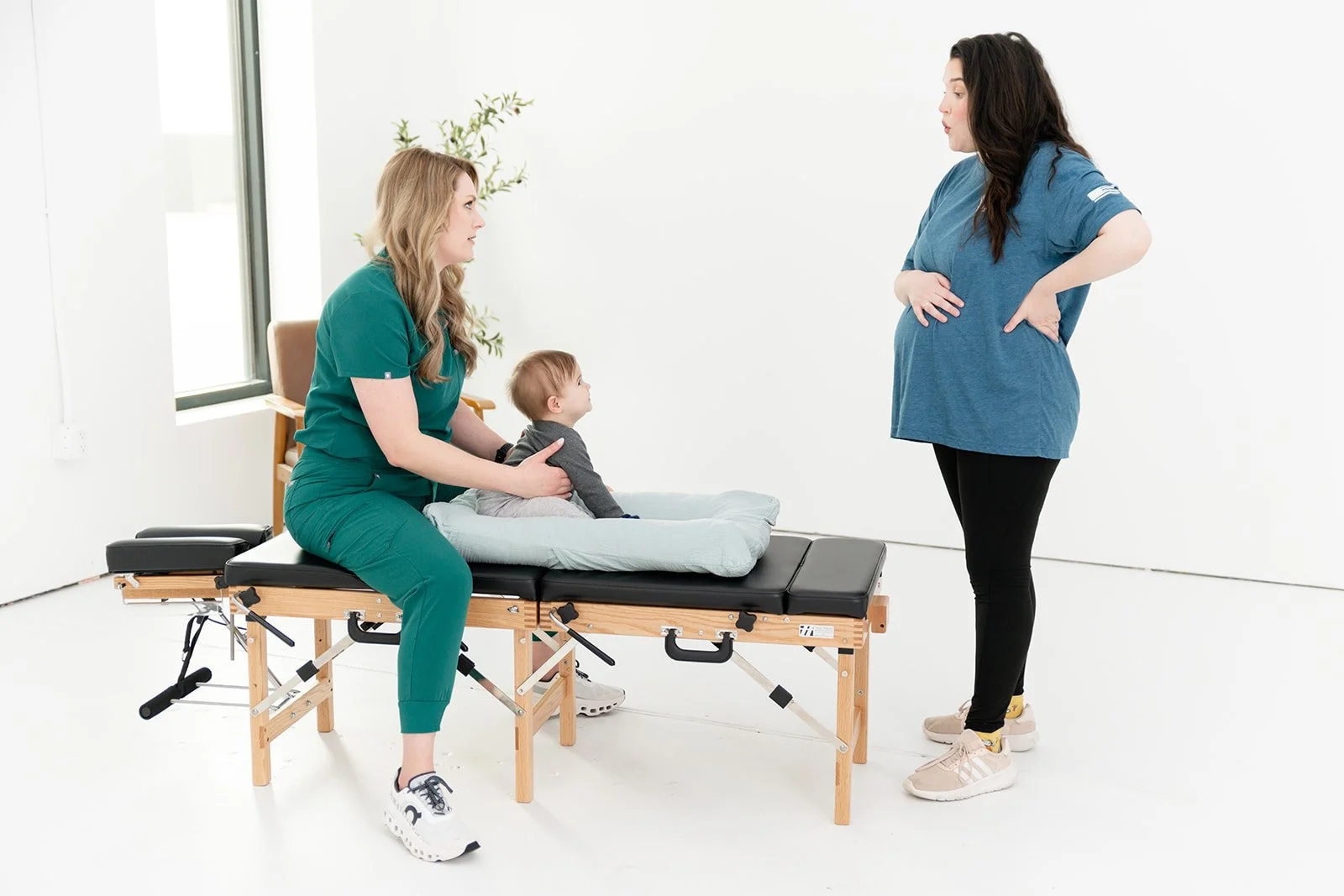
When an infant drops onto all fours, their nervous system begins executing complex, coordinated motor sequences. Hands-and-knees crawling relies on contra-lateral coordination—the simultaneous movement of the opposite arm and leg (for instance, the right hand advancing with the left knee). This diagonal pattern requires the left and right hemispheres of the brain to communicate rapidly across the corpus callosum, the thick band of nerve fibers connecting both sides of the brain.
From a neurological perspective, rhythmic alternating movements are guided by central pattern generators within the spinal cord and integrated by the brainstem and cerebral cortex. Biomechanically, this quadrupedal gait represents a foundational movement pattern deeply rooted in human motor biology. Ground-based exploration provides continuous sensory feedback through the skin, joints, and inner ear, which helps refine the infant's sensory maps and supports healthy infant nervous system function. Understanding the mechanics of quadrupedal biomechanics reveals that crawling is not merely a transitional stage before walking, but an active whole-body workout that engages the entire neurological architecture.
Neurological Foundations: Why Crawling Matters: Cross-Body Movement and Your Baby’s Development
The connection between cross-lateral movement and brain development is a dynamic, reciprocal process. Every time an infant reaches across their body or coordinates opposite limbs to propel forward, electrical impulses travel across the corpus callosum. Research utilizing electroencephalograms (EEG) demonstrates that acquiring new gross motor skills—whether hands-and-knees crawling or early steps—correlates with measurable increases in neural connectivity and coherence across different brain regions.
This bilateral integration allows both hemispheres of the brain to work in harmony. Motor cortex mapping expands as the hands press into different floor textures, providing rich proprioceptive and tactile feedback. Rather than being an isolated motor trick, this cross-body rhythm forms resilient neural pathways that support processing speed, motor planning, and sensory organization throughout childhood.
Physical Foundations: Hip Socket Formation, Shoulder Stability, and Spinal Motion
Crawling on hands and knees provides unique mechanical loading that shapes a baby's musculoskeletal framework. At birth, an infant's hip sockets (the acetabula) are shallow and pliable. The dynamic, alternating weight distribution of quadrupedal crawling pushes the femoral head into the socket, deepening the acetabulum and helping to properly mold the hip joint for upright walking.
Simultaneously, weight-bearing through extended arms strengthens the shoulder girdle, stabilizes the scapulae, and stretches the small palmar muscles of the hands. This floor-based posture also engages deep spinal stabilizers, including the multifidus and transverse abdominis muscles, while gently mobilizing the 24 moveable vertebrae through reciprocal spinal rotation.
| Developmental Feature | Hands-and-Knees Crawling | Belly Scooting / Commando Crawl |
|---|---|---|
| Primary Muscle Engagement | Deep spinal stabilizers, core, shoulders, gluteals | Upper back, forearms, anterior core |
| Hip Socket (Acetabulum) Molding | High dynamic compression for optimal socket depth | Moderate compression; limited vertical joint loading |
| Spinal Rotation | Active, rhythmic alternating segmental rotation | Limited lateral flexion; minimal rotational movement |
| Shoulder & Hand Loading | Full weight-bearing through open palms and extended arms | Weight distributed along elbows and forearms |
| Midline Crossing Demand | Continuous cross-lateral diagonal pairing | Variable; often relies on asymmetrical pulling |
Sometimes, structural restrictions or birth tension and spinal restriction can make weight-bearing or spinal rotation uncomfortable for a little one, causing them to adopt asymmetrical movement strategies instead of a balanced crawl.
Crossing the Midline and Long-Term Cognitive Readiness
Crossing the midline is the ability to spontaneously move a limb across the imaginary vertical line that divides the left and right sides of the body. In everyday infant movement, this looks like reaching for a rattle on the left side using the right hand, or rotating the torso while transitioning from a belly position into a seated posture.
This physical skill directly parallels visual and cognitive readiness. While crawling, an infant practices binocular vision and visual convergence: their eyes constantly shift focus from the floor inches below their face to a target across the room. This rhythmic shifting between near and distant focal points lays the groundwork for visual tracking, spatial awareness, and depth perception. Later in childhood, these same tracking pathways and bilateral coordination skills allow a student to track words smoothly across a page from left to right, hold paper steady with one hand while writing with the other, and navigate complex spatial environments. Exploring the developmental benefits of infant movement underscores how early motor patterns help integrate sensory input, particularly for children with emerging sensory processing differences.
Supporting Your Infant's Motor Milestones and Floor Play
Creating an environment that invites movement is the single most effective way to support your baby's natural gross motor progression. In an era filled with infant swings, bouncers, and car seat travel systems—devices that can unintentionally contribute to "container syndrome"—intentional floor play provides essential space for natural exploration.
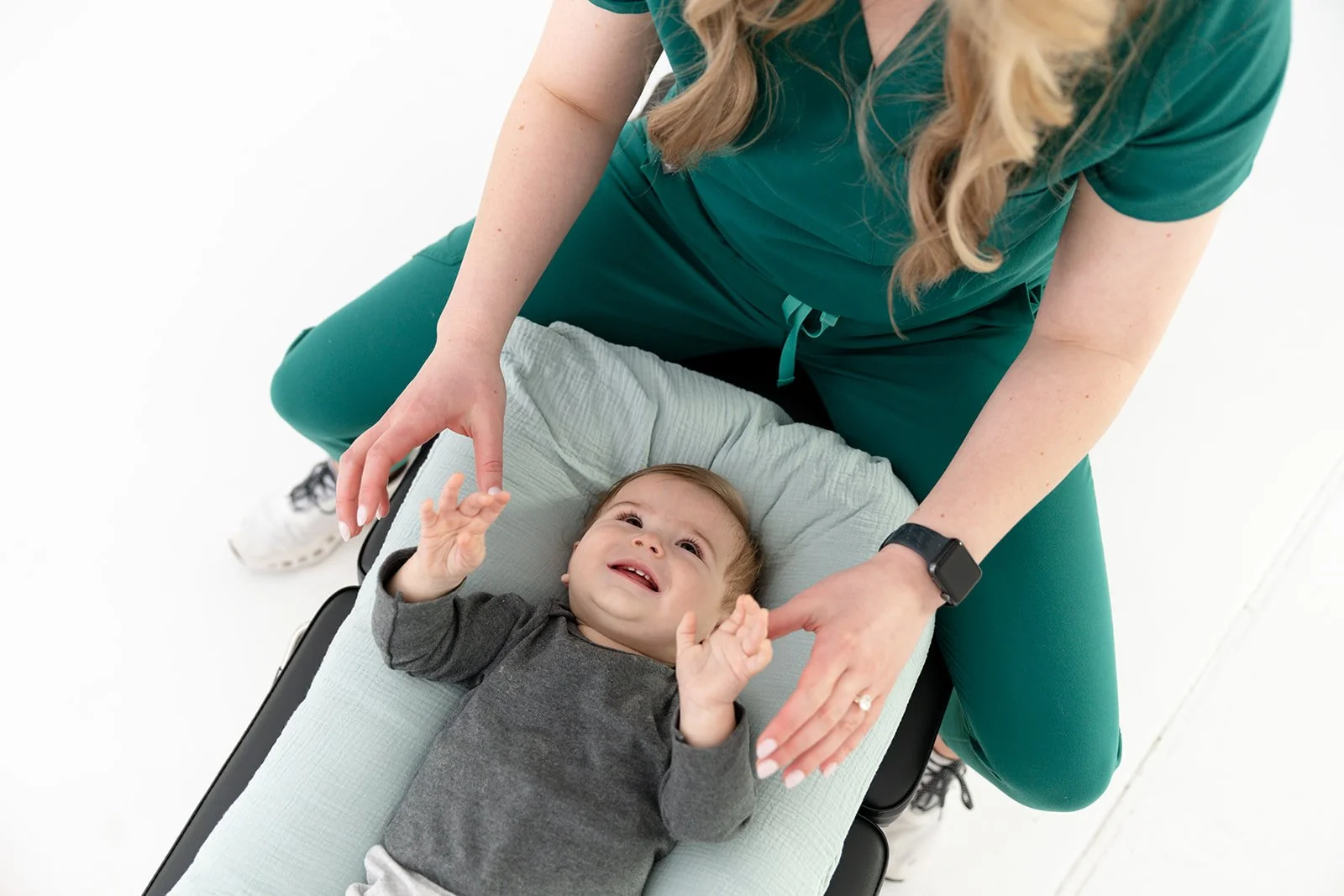
Unrestricted floor time allows babies to push up, roll, pivot, and experiment with weight shifts. Understanding how chiropractic care supports baby milestones involves recognizing that gentle alignment, coupled with purposeful play, gives the body the freedom it needs to progress comfortably from one developmental stage to the next.
Practical Play Strategies: Why Crawling Matters: Cross-Body Movement and Your Baby’s Development
You do not need specialized equipment or rigorous exercise routines to encourage healthy mobility. Simple adjustments to daily play offer rich sensory and physical challenges:
- Chest-to-Chest Tummy Time: For young infants, practicing tummy time while resting on a caregiver's chest provides comforting visual connection while strengthening neck, shoulder, and spinal extensors.
- Rolled Towel Support: If your baby struggles with tummy time or fatigues quickly, place a small, rolled-up hand towel under their upper chest to take pressure off their arms and encourage weight-bearing.
- Motivating Toy Placement: Place engaging toys just outside their immediate reach—slightly to the left or right—to invite reaching, torso twisting, and weight transfer across the midline.
- Varied Floor Textures: Allow your baby to explore different safe surfaces, such as soft carpets, firm foam play mats, smooth hardwood floors, or a blanket laid out on outdoor grass, to challenge balance and skin sensations.
- Barefoot Floor Play: Keeping babies barefoot indoors allows their toes and foot musculature to grip the floor, providing essential sensory feedback for forward propulsion.
- Gentle Obstacle Navigation: As mobility emerges, place low sofa cushions, rolled blankets, or your own legs on the floor for your baby to crawl over, building pelvic flexibility, balance, and problem-solving skills.
Navigating Skipped Milestones, Asymmetries, and Pelvic Tension
Every baby develops along their own unique timeline. While hands-and-knees crawling offers wonderful developmental advantages, some infants adopt creative movement styles such as bottom-scooting, combat crawling with one leg dragging behind, or hitch-crawling using a single foot planted on the floor.
Occasional asymmetrical exploration is a normal part of motor learning. However, persistent movement asymmetries often point to subtle biomechanical factors, such as tight hip flexors, pelvic misalignment, or lingering neck and spinal tension from birth positioning. If your baby resists bearing weight on both knees, arches their back persistently, or bypasses floor mobility altogether due to discomfort, a thorough developmental evaluation can bring clarity.
At Magnolia Chiropractic in Norman, OK, we provide gentle, patient-centered care tailored to the needs of infants and growing families. By gently evaluating spinal mobility, cranial comfort, and pelvic balance, our pediatric chiropractor in Norman, OK helps release underlying muscular tension. Restoring comfortable movement allows your baby to explore their world freely, build cross-body coordination naturally, and progress confidently through every developmental stage.
