
Supporting Sleep and Movement During Your Baby's First Holiday Season

Supporting sleep routines and movement during a baby's first holiday season does not require a perfect schedule. Keep familiar feeding and sleep cues, watch for early sleepy signs, and give your baby short, supervised tummy-time breaks while awake. At gatherings, take a quiet break when your baby needs one. For naps, use a firm, flat sleep space rather than a car seat or sofa.
I'm Leah Bagg, a Norman chiropractor with training in gentle infant and pediatric care. In Baby's First Holiday Season: Supporting Sleep Routines and Movement, I'll share practical ways to make room for rest and play, even when holiday plans change.
Baby's First Holiday Season: Supporting Sleep Routines and Movement
The first holiday season with a baby brings joy, family gatherings, and plenty of excitement. However, the shift in environments, altered meal times, and stream of visitors can quickly disrupt your little one's emerging internal rhythms. Newborns sleep anywhere between 8 to 18 hours a day, typically in short stretches of two to three hours. In fact, research shows that nearly two-thirds (59%) of parents with infants under one year old report their baby sleeps for less than four hours at a time, and about one-third of babies will not sleep through the night consistently by 12 months.
Understanding infant physiology helps set realistic expectations. A baby's sleep cycle lasts only about 50 to 60 minutes—the inverse of an adult's. Infants enter active (REM) sleep first, where they twitch, breathe irregularly, and awaken easily for roughly 20 minutes before transitioning into deeper, quiet sleep. By focusing on simple baseline cues and honoring age-appropriate wake windows (often just 60 to 90 minutes for young infants), you can support their natural rhythms without feeling tethered to a rigid schedule.
Navigating Holiday Sleep Schedules, Travel, and Unfamiliar Environments
Traveling across the OKC metro or taking a road trip for the holidays requires intentional preparation for both rest and body comfort. When preparing for car travel, knowing how to prep your body and your kids before a long drive helps minimize spinal strain and restlessness. Babies need stops every two to three hours to feed, stretch, and change positions outside their car seats.
When you arrive at your destination, setting up the sleep space before festivities begin creates a safe haven. Following evidence-based holiday travel sleep advice ensures that baseline safety remains uncompromised. Recreate the familiar sensory environment from home using a portable crib, travel blackout shades, and continuous white noise.
| Sleep Environment Factor | Home Nursery Setup | Travel / Holiday Setup |
|---|---|---|
| Sleep Surface | Standard firm crib/bassinet mattress | Pack 'n Play or portable bassinet with firm pad |
| Lighting | Blackout curtains or dim ambient light | Portable suction blackout shades or temporary foil/tape |
| Sound Cues | Nursery sound machine (50–60 dB) | Portable white noise placed away from baby's ears |
| Temperature | Controlled 68°F to 72°F | Layered sleep sack tailored to room climate |
| Bedtime Routine | Bath, feeding, lullaby, book | Abbreviated 10-minute version: diaper, sleep sack, song |
If an event runs past your baby’s bedtime, maintain flexibility. Aim for at least one solid nap in a quiet space during the day to anchor their nervous system, and adjust bedtime slightly earlier the following evening to prevent cumulative sleep debt.
Preventing Overstimulation and Soothing Overtired Newborns
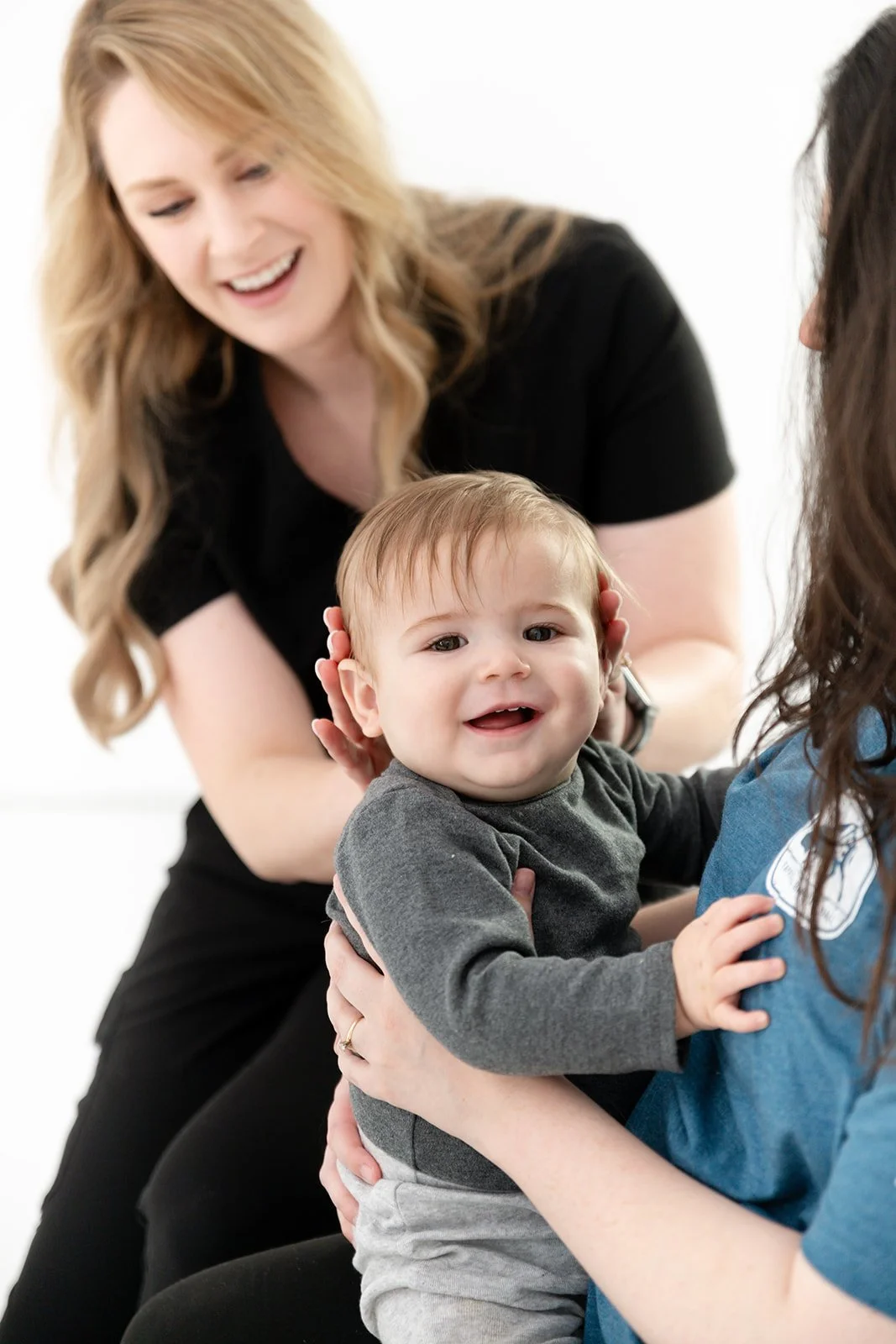
Bright holiday lights, pass-the-baby circles, and elevated noise levels can overwhelm an immature nervous system. An overstimulated infant often catches a "second wind," appearing hyper-alert or fussy, which makes falling asleep challenging. Watch for subtle early sleepy cues:
- Glazed or averted gaze
- Redness around the eyebrows and eyelids
- Slowed movements or sudden quietness
- Subtle yawns and hand clenching
When a baby becomes overtired, recognizing common signs your nervous system is out of balance applies just as much to infants as adults. Create a low-stimulation reset by stepping into a darkened room. Rhythmic shushing, gentle rocking, skin-to-skin contact, or a soothing downward stroke over the eyebrows can activate the parasympathetic "rest-and-digest" response, allowing your baby to settle.
Prioritizing Physical Development: Supporting Sleep Routines and Movement During a Baby's First Holiday Season
Between car seats, strollers, and holiday bouncers, babies spend extended periods in semi-upright containers during travel. This restriction can contribute to body tightness and postural asymmetry. Understanding why tummy time matters for your baby's development highlights how essential floor time is for spinal strength, neck control, and preventing head shape flattening.
The American Academy of Pediatrics provides helpful guidance on infant physical activity, emphasizing unrestricted floor play throughout the day. Integrate movement naturally:
- Chest-to-Chest Tummy Time: Recline on a sofa and place your baby on your chest to encourage head-lifting while maintaining eye contact.
- Blanket Play: Lay a clean blanket on the living room floor so your baby can kick, stretch, and roll freely.
- Ergonomic Carrying: Practice babywearing with an ergonomic wrap or carrier that supports the baby's natural "M-position" (knees higher than hips), protecting both their spine and yours.
These free-movement opportunities relieve spinal tension and build the foundation for major motor milestones like rolling, crawling, and independent walking.
Involving Family and Friends While Protecting Newborn Rhythms
Well-meaning loved ones often want to hold the baby constantly. You can graciously share the joy without compromising your baby's comfort by establishing gentle boundaries ahead of time:
- Offer Contact Nap Opportunities: Invite a grandparent or aunt to hold the baby for a contact nap near the end of a wake window. This allows family bonding while protecting your baby's rest.
- Enforce Clean Hands: Request that all guests wash their hands before holding the baby, especially during winter viral seasons.
- Designate a Quiet Room: Inform the host in advance that you will need a private space for feedings, diaper changes, and calming breaks.
- Delegate Tasks: Let family members assist by refilling your water, plating a meal, or holding older siblings, allowing you to focus on the infant's feeding and soothing rhythms.
Restoring Balance and Routine After Holiday Festivities
Once holiday gatherings conclude, returning to your familiar home rhythm allows the entire household to recover. It is normal for babies to experience brief sleep regressions or temporary fussiness after days of heightened stimulation and travel. Prioritize consistent wake times, full daylight exposure during morning play, and calm bedtime rituals to reset the circadian clock.
Travel, awkward sleeping positions, and prolonged car seat use can sometimes leave babies with physical tension or discomfort. Watching for signs your baby may have tension after birth can help you identify subtle restrictions in their neck, shoulders, or pelvis—such as favoring one side when turning their head, arching their back during feeds, or struggling to settle flat on their back. Exploring the pediatric chiropractic benefits can offer insight into how gentle, tailored care supports nervous system regulation, mobility, and comfort.
At Magnolia Chiropractic, we provide evidence-based, compassionate care for infants and mothers across Norman and the OKC metro. If your little one seems fussy, tight, or out of rhythm after the holidays, our pediatric chiropractor in Norman, OK can gently assess spinal alignment and cranial mobility, helping your baby feel comfortable and supported in their body.
Long-Term Developmental Benefits of Supporting Sleep Routines and Movement During a Baby's First Holiday Season
Protecting rest and movement during the holidays fosters healthy developmental habits that extend well beyond the season. Honoring natural sleep cues builds a resilient circadian rhythm, reducing chronic overtiredness and bedtime battles. Supervised movement and tummy time strengthen spinal curves, coordination, and muscular balance, directly assisting milestone transitions from tummy play to crawling and walking.
Most importantly, approaching the holidays with flexibility, clear boundaries, and body awareness protects parental well-being. By giving yourself grace and meeting your baby's foundational needs, you create peaceful, memorable holiday moments rooted in connection and care.
