
Why Does My Child W-Sit? When It’s Normal and When to Pay Attention
Why Does My Child W-Sit? When It’s Normal and When to Pay Attention
Children W-sit because the position creates a wide base of support that keeps the torso upright with minimal core and hip muscle effort. This is normal when it appears briefly during active play and the child moves easily between many different postures. It deserves attention when it becomes the child's only sitting position, especially if it is paired with clumsiness, an in-toeing gait, or difficulty crossing the midline of the body.
When you look across the living room and see your toddler settled comfortably in a wide "W" on the rug, it can look surprising—or even painful—to adult eyes. Yet, young children slide into this shape effortlessly. Understanding why children W-sit—and when it may deserve a closer look—begins with the mechanics of childhood play.
Children naturally seek comfort and efficiency. When sitting on the floor to build towers or color, W-sitting provides an exceptionally wide, low base of support. This wide base acts like an internal kickstand, allowing a child to keep their torso upright without exerting significant core or hip muscle effort. In an evidence-based analysis on W-sitting biomechanics, experts note that toddlers often use this wide posture simply because it makes reaching for toys easy and fatigue-free.
During early childhood, children move through rapid developmental stages. As babies master rolling, pushing up, crawling on all fours, and taking their first steps, their bodies continually adapt to gravity. Exploring how chiropractic care supports your baby's development and milestones highlights how vital dynamic movement is during these early transitions. When a child crawls across the carpet, dropping backward briefly into a W-shape to inspect a toy before crawling forward again is entirely normal. The key factor is movement variety: as long as a child shifts between different postures dynamically, brief W-sitting is simply one tool in their motor repertoire.
Anatomical Factors: Why Does My Child W-Sit? When It’s Normal and When to Pay Attention to Hip Mobility
A child's anatomy is vastly different from an adult's. Infants are born with higher femoral anteversion—a natural inward twist of the thigh bone relative to the hip socket (around 30 to 40 degrees at birth). As children grow, walk, run, and bear weight, this angle gradually decreases to roughly 15 degrees by late childhood.
Because of this natural joint laxity and bone orientation, inward hip rotation feels comfortable and painless for young kids. A comprehensive clinical review of sitting postures emphasizes that this flexibility peaks around age 3 and naturally decreases as muscle tone develops and bones remodel.
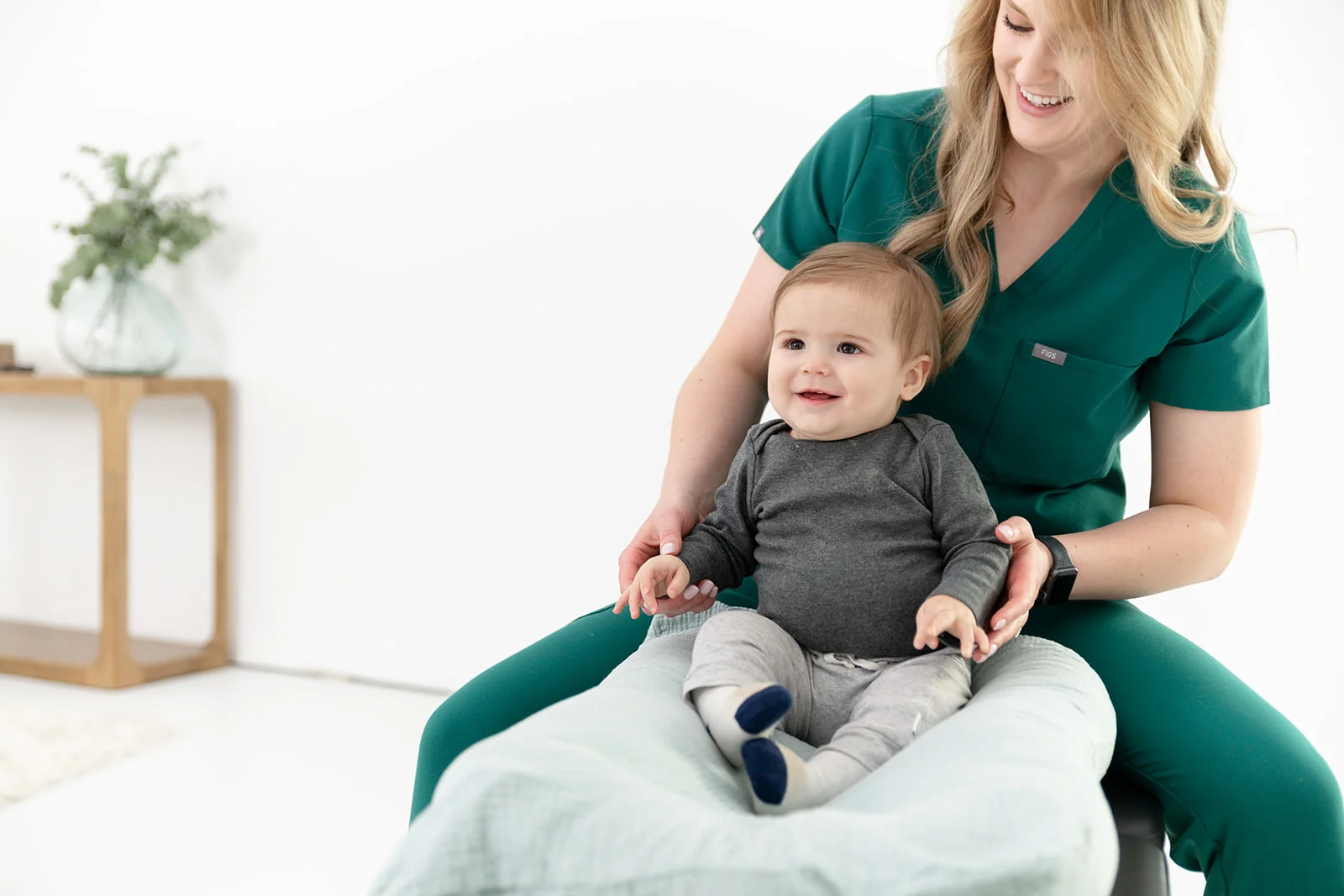
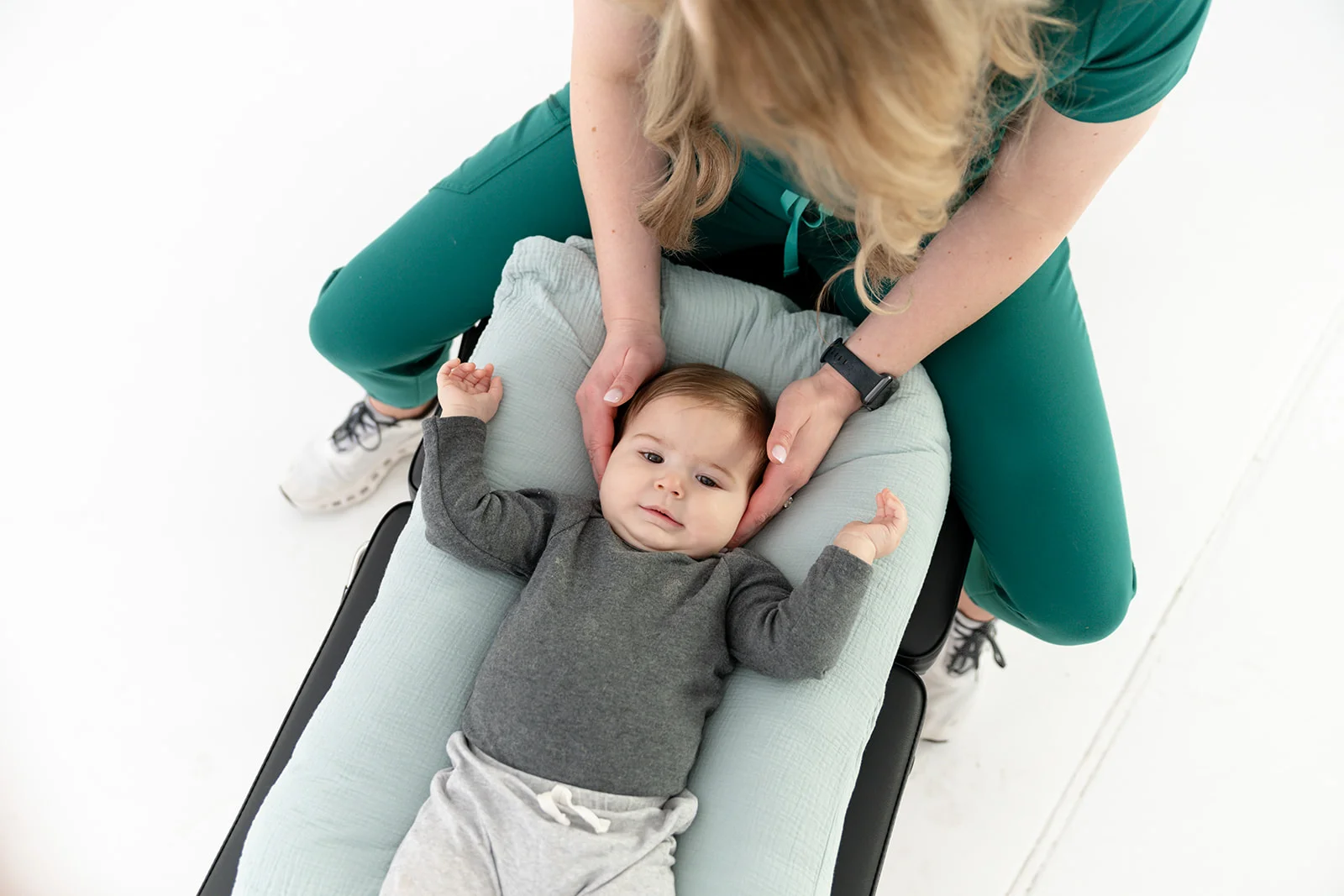
However, pelvic balance and hip symmetry matter. If a child exclusively favors inward hip rotation, it can lead to muscular tightness in the hip adductors and hamstrings while leaving hip external rotators underutilized. Scheduling a gentle toddler chiropractic wellness check allows us to evaluate pelvic alignment, sacral mobility, and hip range of motion, ensuring that your little one's joints are moving freely as they grow.
Developmental Signs: Why Does My Child W-Sit? When It’s Normal and When to Pay Attention to Neuromuscular Coordination
Beyond bone structure, postural habits are tied to the nervous system and motor planning. When a child sits in a fixed W-position, their hips and pelvis are locked in place. This "locked" base makes it unnecessary—and difficult—for them to rotate their torso.
Trunk rotation is crucial for crossing the body's midline (reaching across with the right hand to pick up a toy on the left side). Midline crossing is a foundational motor skill that supports bilateral coordination, hand dominance, and later classroom activities like reading and writing. When a child relies solely on a static W-sit, they often compensate by only using their right hand for objects on the right side and their left hand for objects on the left side.
Persistent reliance on this posture can also be accompanied by subtle neurological indicators, such as low trunk tone, excessive tripping, or an in-toeing ("pigeon-toed") gait. Recognizing common signs your nervous system is out of balance helps parents spot when a child's postural preferences stem from underlying tension, postural instability, or core fatigue rather than simple comfort.
Evidence-Based Solutions and Postural Guidance for Growing Bodies
Addressing W-sitting does not require constant scolding or stressful corrections. In fact, calling out "fix your legs!" repeatedly can make floor play frustrating for a young child. Instead, supporting your child's posture works best through gentle physical redirection, environmental modifications, and play-based strength building.
Our kids chiropractic care guide 2026 outlines how gentle spinal checks paired with active gross motor play foster natural, balanced posture from the ground up.
Practical Floor Posture Alternatives and Core Strengthening Games
The most effective way to help children move away from habitual W-sitting is to introduce comfortable alternatives and build core stability through fun, everyday play.
- Tailor Sitting (Crisscross Applesauce): Sitting with legs crossed in front encourages external hip rotation and active core engagement.
- Side Sitting (Z-Sitting): Both legs bend to one side, prompting the child to engage oblique muscles and rotate the trunk.
- Long Sitting: Sitting with legs extended straight forward gently stretches the hamstrings and challenges upright spinal alignment.
- High Kneeling: Kneeling upright at a low coffee table or sensory bin activates the glutes and abdominal stabilizers.
- Tummy Time & Prone Play: Lying on the belly propped on elbows while coloring or doing puzzles strengthens the upper back, neck, and shoulder girdle.
- Animal Walks: Pretending to be a bear, crab, or frog builds bilateral coordination, shoulder stability, and full-body core strength.
| Sitting Position | Primary Musculoskeletal Benefit | How to Encourage It at Home |
|---|---|---|
| Crisscross (Tailor) | Promotes external hip rotation & active core stability | Use short cues like "crisscross legs to be strong" |
| Side Sitting (Z-Sit) | Encourages trunk rotation & dynamic weight-shifting | Place favorite toys slightly to one side during play |
| Long Sitting | Stretches hamstrings & challenges upright spine posture | Read books together with backs against a floor cushion |
| High Kneeling | Engages hip extensors & core stabilizers | Set puzzles or building blocks on a low coffee table |
| Low Stool / Beanbag | Takes joint torque off hips while supporting neutral spine | Provide small child-sized seating during crafts |
Supporting Pediatric Biomechanics and Pelvic Alignment
Every child develops at their own unique pace, but optimal joint mobility and nervous system function make that journey smoother. At Magnolia Chiropractic in Norman, OK, we provide patient-centered, gentle chiropractic care tailored specifically for infants, toddlers, and growing families.
Rather than rushed appointments or one-size-fits-all treatments, we take the time to evaluate spinal alignment, sacral balance, and hip mechanics thoroughly. If you are noticing persistent postural asymmetry, gait changes, or simply want reassuring answers about your child's movement habits, scheduling a visit with a dedicated pediatric chiropractor in Norman, OK can help ensure your child's spine and pelvis develop with balance, strength, and ease.
