
The Poop Post for New Parents
When Your Baby's Belly Won't Cooperate: What Parents Need to Know

Pediatric adjustment for digestion is a gentle, hands-on chiropractic approach that helps support your baby's nervous system so their gut can work the way it should.
Quick answer — here's how it works:
- The spine and the nervous system are closely connected. When there's tension or misalignment in the spine, it can interfere with the nerve signals that control digestion.
- A pediatric chiropractor uses very light fingertip pressure — not the kind of adjustment you'd get as an adult — to gently release that tension.
- This may help with common infant digestive issues like colic, reflux, constipation, and gas.
- It's non-invasive and gentle enough for newborns. Many parents notice changes within just a few visits.
If you've ever spent an evening bouncing a screaming, gassy baby around your living room at midnight, you already know how helpless that feeling can be. Digestive troubles — colic, reflux, constipation — are incredibly common in infants and young children. They're exhausting for babies and for parents.
The good news? There's more than one way to support your baby's digestive health. And for many families, gentle chiropractic care has been a meaningful piece of that puzzle.
A reported case described a 3-month-old infant with a medical diagnosis of GERD who showed improvement after four chiropractic visits, including better sleep and less gas, vomiting, and breastfeeding difficulty over the following months. A single case cannot predict results for every baby, but it helps explain why some parents look into gentle, supportive care as one part of a broader plan.
Digestive struggles in babies can feel confusing, especially when you're trying to figure out what is normal and what is not. A pediatric adjustment for digestion focuses on gentle, age-appropriate care that supports your baby's nervous system, movement, and comfort. Here in Norman, we use a calm, light-touch approach designed specifically for infants while helping parents better understand what may be contributing to issues like tension, fussiness, or irregular digestion.
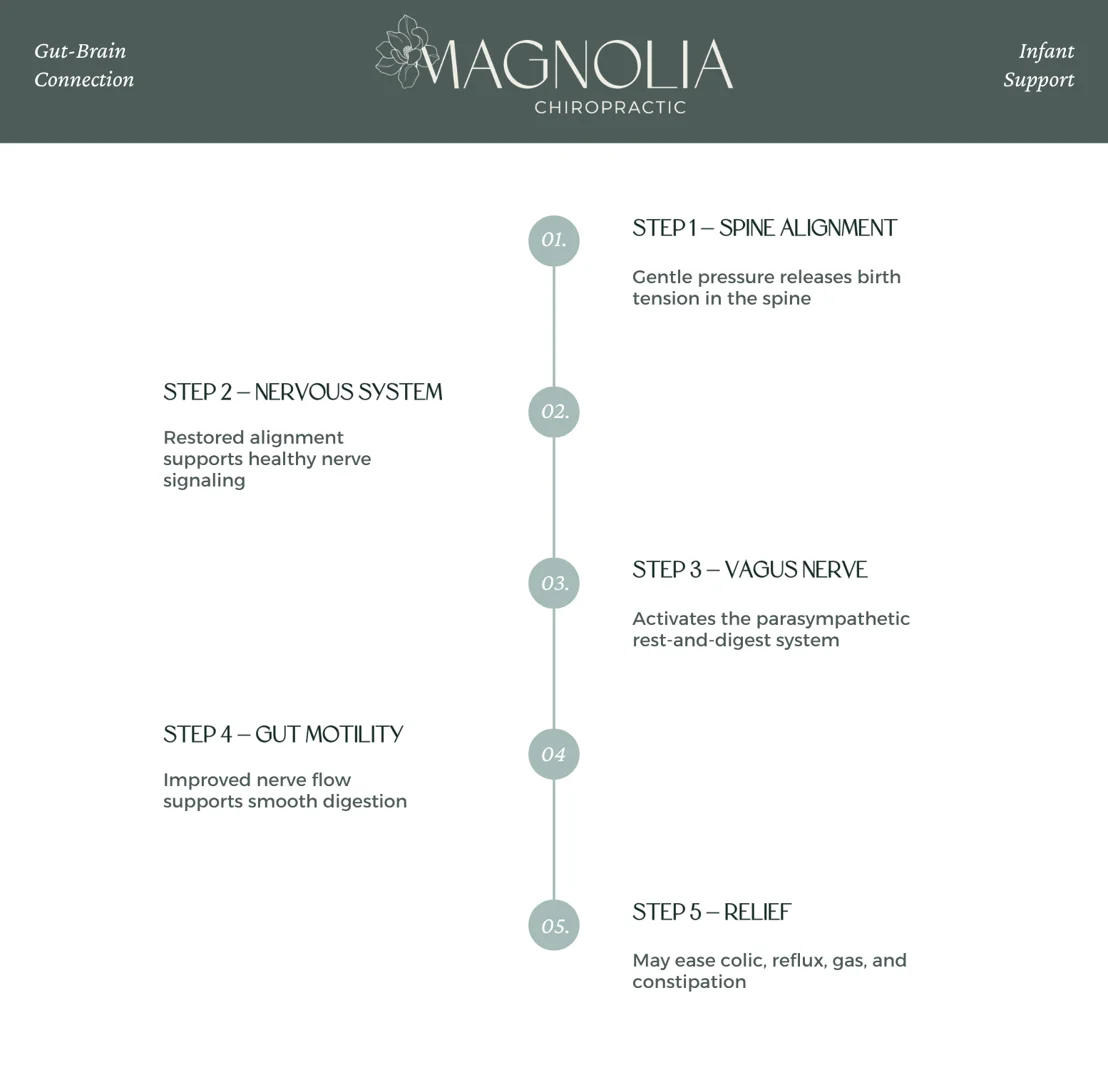
How a Pediatric Adjustment for Digestion Supports Your Baby's Nervous System
To understand how a chiropractic adjustment can influence a baby's tummy, we have to look at the master control system of the entire body: the nervous system.
The brain communicates with every single organ, including the stomach, intestines, and colon, via the spinal cord and the nerves that exit between the vertebrae. If there is physical tension or a minor structural restriction in the spine, it can disrupt this delicate pathway of communication.
This structural tension often begins during the birth process. Even in the most natural, uncomplicated births, the physical forces required to bring a baby into the world can place a significant amount of strain on a newborn's delicate neck and spine. If you want to dive deeper into how this happens, you can read our guide on What is Pediatric Chiropractic and explore the common Signs Your Baby May Have Tension After Birth and What to Do About It.
When birth strain goes unaddressed, a baby's nervous system can get stuck in a state of sympathetic dominance—the "fight or flight" response. Because digestion is a parasympathetic process ("rest and digest"), a baby who is physically tense or uncomfortable will naturally struggle to digest food, eliminate gas, and pass bowel movements comfortably.
The Vagus Nerve and the Gut-Brain Connection
The primary highway of the "rest and digest" system is the vagus nerve. This massive cranial nerve exits the brainstem right at the base of the skull, traveling down past the upper cervical spine to regulate swallowing, heart rate, and gut motility.
If a baby has structural tension in their upper neck—perhaps from their position in utero or from birth strain—it can put pressure on the pathways surrounding the vagus nerve. When vagal tone is compromised, the rhythmic, wave-like muscle contractions that move food through the digestive tract (peristalsis) can slow down or become uncoordinated. This disruption is a key factor in many pediatric functional gastrointestinal disorders. Clinical reviews, such as those exploring Pediatric Aspects of Nutrition Interventions for Disorders of Gut-Brain Interaction, emphasize how closely gut motility and nervous system signaling are linked. By releasing tension in the upper neck, we help clear the path for the vagus nerve to do its job, allowing the digestive tract to relax and function smoothly.
Gentle Pediatric Adjustment for Digestion Techniques for Infants
When parents hear the word "adjustment," they often picture the manual manipulation used on adults. Pediatric chiropractic care is entirely different.
For infants, we use incredibly gentle, sustained touch—often referred to as fingertip pressure. The amount of pressure used to adjust a newborn is no more than the force you would use to test the ripeness of a tomato or a peach. There is no twisting, cracking, or sudden popping. Instead, we find the specific areas of spinal tension and apply a light, steady contact to help the baby's body release the restriction naturally.
This non-invasive approach is exceptionally safe, comfortable, and tailored to the unique developmental stage of your baby. For a closer look at our safety standards and holistic philosophy, check out our Pediatric Chiropractic Benefits Complete Guide.
Addressing Colic, Reflux, and Constipation
When a baby's nervous system is balanced, we regularly see a positive ripple effect on their digestive comfort. Parents frequently report that their infants experience faster relief from colic symptoms, better bowel regularity, and improved sleep quality. In fact, many families note that their children sleep more soundly and experience fewer nighttime awakenings as their digestive discomfort resolves.
To help you identify what might be going on in your little one's belly, here is a quick guide comparing the most common pediatric digestive concerns:
| Condition | Common Signs in Infants | Potential Chiropractic Connection |
|---|---|---|
| Colic | High-pitched crying, arching the back, clenched fists, symptoms often peaking in the evening. | Birth tension in the upper neck or mid-back keeping the nervous system in a stressed, "fight-or-flight" state. |
| Reflux (GERD) | Frequent spitting up, crying or arching during or after feedings, wet burps, and difficulty lying flat. | Spinal tension in the upper neck or mid-back (where nerves supply the stomach and diaphragm), affecting the lower esophageal sphincter. |
| Constipation | Hard, infrequent stools, straining or crying while trying to pass stool, and a firm, bloated belly. | Structural restriction in the lower back or sacrum, which can interfere with the pelvic nerves responsible for bowel elimination. |
Supporting Your Child's Long-Term Wellness and Development
As babies grow, their physical needs evolve. Pediatric chiropractic care isn't just about resolving acute issues like gas or constipation; it is about supporting your child's overall neurological and physical development as they grow from newborns into active toddlers.
Developmental Milestones and Spinal Alignment
Every major developmental milestone—from lifting the head and rolling over to crawling and taking those first independent steps—places new demands on your child's spine and nervous system.
For example, when a baby begins to crawl, they develop the secondary curves of their spine (the cervical and lumbar curves). Proper structural alignment during this stage is essential for developing healthy motor skills, coordination, and posture. If a child has underlying spinal tension or a restricted joint, it can make certain movements uncomfortable, occasionally leading them to skip milestones (like crawling) or favor one side of their body.
By maintaining spinal wellness, we support their natural growth patterns. If you want to learn more about how physical alignment influences these early stages, read about How Chiropractic Care Supports Your Babys Development and Milestones.
Comparing Manual Care with Conventional Nutritional Strategies
When children experience chronic digestive issues, pediatricians and specialists often recommend nutritional interventions. These are highly valuable, evidence-based approaches that focus on fueling the body correctly.
For instance, clinical guidelines detailed in the Nutritional Management of Pediatric Gastrointestinal Motility Disorders highlight how specific dietary adjustments can manage motility issues. Similarly, the Functional gastro-intestinal disorder algorithms focus on early recognition, parental reassurance and nutritional strategies emphasize that non-pharmacological approaches, such as parental reassurance and targeted nutrition, should be the first line of defense for functional gut issues.
Manual chiropractic care and nutritional strategies are not mutually exclusive—they are highly complementary. While nutritional management ensures that your child is consuming the right foods and nutrients for their gut, a pediatric adjustment for digestion ensures that the nervous system is actually capable of coordinating the digestion, absorption, and elimination of those nutrients. By addressing both the structural and biochemical aspects of gut health, we give children the best foundation for recovery.
When to Seek a Pediatric Adjustment for Digestion in Norman, OK
How do you know if your child's digestive struggles might be related to spinal or nervous system tension? Here are a few common clues parents can look for:
- Your baby constantly arches their back, especially when held, feeding, or resting.
- They prefer to turn their head to only one side (which can indicate upper neck tension).
- They struggle with tummy time or seem unusually stiff.
- They experience chronic gas, reflux, or constipation that doesn't improve with basic dietary changes.
At Magnolia Chiropractic in Norman, OK, we believe in providing thoughtful, patient-centered care. We never rush our appointments or offer one-size-fits-all solutions. Instead, we take the time to listen to your story, thoroughly evaluate your child's spine and nervous system, and explain every step of our gentle process so you feel completely comfortable and informed.
If you're ready to support your little one's digestive health and overall wellness, we invite you to learn more about our team and schedule a visit with a trusted Pediatric Chiropractor Norman OK. Let's work together to help your baby rest, digest, and grow with ease.
