
All About Flat Head Syndrome & Chiropractic Care
What Every Parent Should Know About Flat Head Syndrome and Chiropractic Care
Flat Head Syndrome (Plagiocephaly): Can Chiropractic Care Help? — here's the short answer:
Yes, chiropractic care can help — particularly by addressing tight neck muscles, improving spinal alignment, and encouraging more balanced head positioning. It works best as part of an early, combined approach alongside repositioning and tummy time.
| What chiropractic can do | What it works best alongside |
|---|---|
| Relieve tight neck muscles (torticollis) | Tummy time and repositioning |
| Improve neck range of motion | Physical therapy |
| Reduce uneven pressure on the skull | Parental home exercises |
| Support natural cranial reshaping | Helmet therapy (in moderate-severe cases) |
Flat head syndrome is more common than many parents realize. Before 1992, it affected roughly 1 in 300 infants. After the American Academy of Pediatrics launched the "Back to Sleep" campaign — which successfully reduced SIDS rates by 40% — rates climbed dramatically. Today, estimates suggest up to 48% of healthy infants under one year old show some degree of positional plagiocephaly.
That's nearly half of all babies.
The good news: most cases respond well to early, gentle intervention. And the earlier you start, the better the outcomes tend to be.
I'm Dr. Leah Bagg, a chiropractor with specialized training in infant and pediatric soft tissue techniques through the ICPA, Spinning Babies, and Peak Potential Institute — and supporting families navigating Flat Head Syndrome (Plagiocephaly): Can Chiropractic Care Help? is something I care deeply about. In this guide, I'll walk you through what the research says, what to expect from care, and what you can do at home starting today.
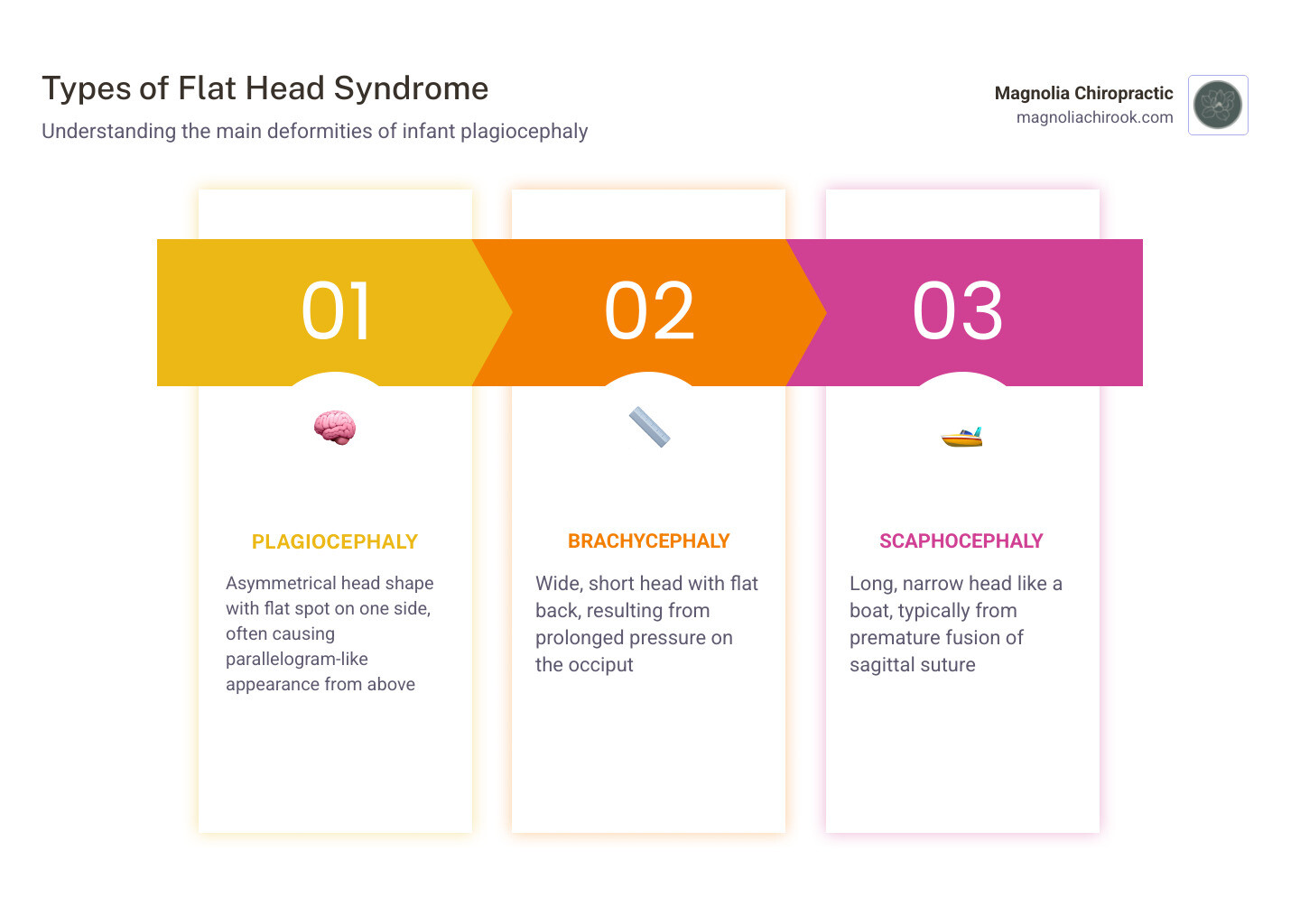
Flat Head Syndrome (Plagiocephaly): Can Chiropractic Care Help?
When we talk about an infant's head shape, we are dealing with incredible malleability. At birth, a baby’s skull is not a single solid bone; instead, it is composed of several plates connected by sutures. This design is brilliant—it allows the head to pass through the birth canal and accommodates the rapid brain growth that occurs in the first few months of life. However, this same flexibility makes the skull susceptible to external pressure.
If a baby consistently rests their head in the same position, that malleable bone can begin to flatten. This is known as positional plagiocephaly. At Magnolia Chiropractic in Norman, OK, we focus on the "why" behind that positioning. Is the baby choosing that side because of habit, or is there a physical restriction making it difficult to turn the other way?
Research suggests that conservative interventions, including manual therapy, can be highly effective. A synthesis of systematic reviews indicates that manual therapy may be more effective than repositioning alone for positional plagiocephaly. By addressing the mechanical restrictions in the neck and spine, we help the baby move more freely, which naturally reduces the constant pressure on one specific spot of the skull.
Understanding the Causes of Plagiocephaly and Torticollis
To understand how we help, we first have to look at the relationship between the head and the neck. In many cases, flat head syndrome is a "roommate" to a condition called Congenital Muscular Torticollis (CMT).
Torticollis occurs when the sternocleidomastoid (SCM) muscle in the neck becomes tight or shortened, causing the baby’s head to tilt to one side and rotate to the other. If a baby has torticollis, they cannot easily turn their head to the opposite side. Consequently, they spend 90% of their time lying on the same spot.
What causes this tightness?
- Intrauterine Constraint: If the baby was "stuck" in one position during the final weeks of pregnancy (common in breech presentations or with twins), their neck muscles may already be tight at birth.
- Birth Trauma: Forces used during delivery, such as vacuum extraction or forceps, can create strain in the upper cervical spine (the neck).
- Subluxations: Small misalignments in the spine can cause the surrounding muscles to guard or spasm, limiting the baby’s range of motion.
By addressing these underlying issues through pediatric chiropractic, we aren't just looking at the flat spot—we are looking at the baby’s ability to move comfortably and symmetrically.
Flat Head Syndrome (Plagiocephaly): Can Chiropractic Care Help with Alignment?
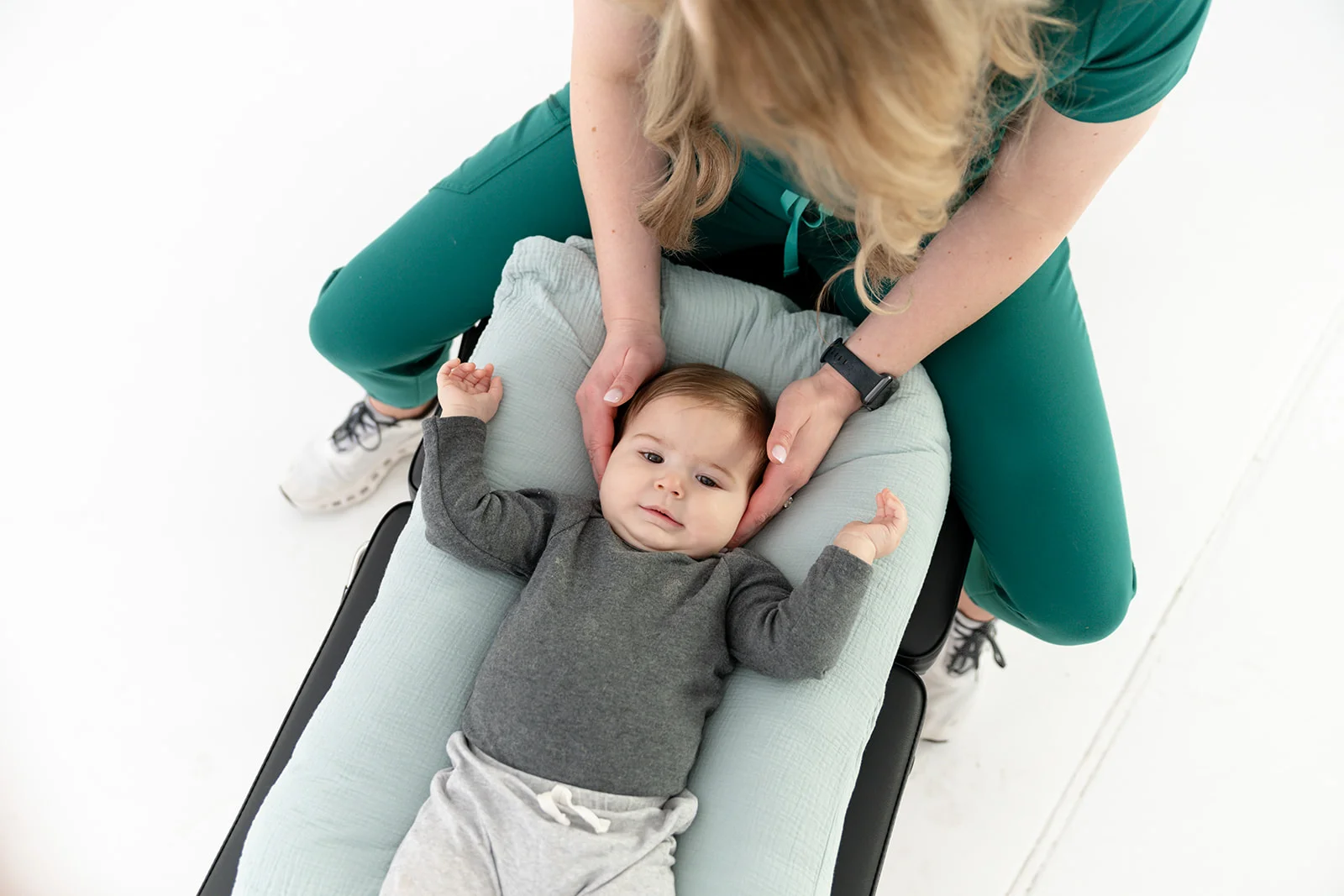
Many parents are understandably nervous about the idea of "adjusting" a baby. It is important to clarify that pediatric chiropractic is nothing like adult chiropractic. There is no "cracking" or "popping."
At Magnolia Chiropractic, we use gentle fingertip pressure—about the same amount of pressure you would use to check the ripeness of a tomato. Our goal is to perform specific cranial work and spinal alignment to:
- Release Tension: We target the tight muscles and connective tissues that are keeping the baby "locked" into one position.
- Restore Motion: By gently adjusting the upper cervical spine (the C1 vertebrae), we improve the baby’s ability to rotate their head fully in both directions.
- Support the Nervous System: The spine houses the nervous system, which controls every muscle and organ in the body. Ensuring the spine is aligned helps the nervous system communicate clearly, supporting overall pediatric chiropractic benefits like better sleep and digestion.
When the neck moves freely, the baby can comfortably participate in "active counter-positioning," which is the most natural way to reshape the skull.
Evidence and Safety: Flat Head Syndrome (Plagiocephaly): Can Chiropractic Care Help?
Safety is our primary concern. Clinical data and case reports provide an encouraging look at the safety and efficacy of this care. One notable case report followed a five-month-old infant with significant asymmetry. After a combination of chiropractic care and helmet therapy, the infant’s Cranial Vault Asymmetry Index (CVAI) was reduced from a severe 14.3% to a much milder 5.8%.
Another study from Australia looked at 25 infants with positional plagiocephaly and found that 100% of them showed resolution after 3 to 4 months of chiropractic care. While every baby is different, these outcomes highlight the power of addressing the structural "kinks" that prevent natural healing.
In our Norman, OK clinic, we find that when we combine chiropractic care with physical therapy and home exercises, parents often see a change in their baby’s "preference" for one side within just a few visits. This shift is the first step toward correcting the head shape.
A Holistic Path to Infant Wellness and Symmetry
Correcting a flat spot is rarely about one single treatment. It is a journey that involves the chiropractor, the pediatrician, and—most importantly—the parents. Because we believe in evidence-based, patient-centered care, we see ourselves as your partners in this process.
When we address the spine and neck, we are setting the stage for the baby to reach their next family chiropractic milestones. A baby who can’t turn their neck easily may struggle with rolling over, or they might develop an asymmetrical crawl. By ensuring symmetry now, we are supporting their long-term wellness and motor development.
Comparing Chiropractic Care to Helmet Therapy and Standard Treatments
Parents often ask if they should choose chiropractic instead of a helmet. The answer depends on the severity of the flattening and the age of the baby.
| Treatment | How it Works | Best Age |
|---|---|---|
| Repositioning | Changing the baby's position to keep pressure off the flat spot. | 0–4 Months |
| Chiropractic Care | Resolving the neck tension (torticollis) that causes the preference. | 0–6+ Months |
| Physical Therapy | Stretching and strengthening exercises for neck and core. | 0–6+ Months |
| Helmet Therapy | A hard shell that guides skull growth into the flat areas. | 4–12 Months |
There is a "golden window" for non-invasive correction. Between birth and 6 months, the skull is at its softest, and the brain is growing at its fastest rate. This internal pressure from the growing brain helps "push" the skull back into a round shape—provided the baby isn't constantly lying on the flat spot.
If the asymmetry is still moderate to severe by 6 months, a helmet (cranial orthotic) may be recommended. Even then, chiropractic care is a wonderful adjunct therapy. A helmet can't fix a tight neck muscle; if the baby is still "fighting" the helmet because their neck is stuck, the results won't be as effective.
Gentle Home Strategies to Support Your Baby’s Progress
While our work in the clinic is important, what happens at home makes the biggest difference. Here are the most effective ways to support your baby’s head shape:
- Tummy Time is King: Aim for short, frequent sessions of tummy time while the baby is awake and supervised. This strengthens the neck, back, and shoulder muscles, taking all pressure off the back of the head.
- Limit "Containers": Car seats, swings, and bouncers are "containers" that keep the baby's head resting against a flat surface. Try to use floor time or babywearing (in an ergonomic carrier) as much as possible.
- The "Switch" Rule: If you always hold your baby in your left arm to feed, their head is always turned the same way. Switch sides for every feeding, and alternate which end of the crib you lay them down in so they have to turn their head a different way to look at the door or a window.
- Visual Stimuli: Place interesting toys or mirrors on the side the baby doesn't usually look toward to encourage them to stretch those neck muscles.
Supporting Developmental Milestones Through Pediatric Care
At Magnolia Chiropractic, we don't just want your baby to have a round head; we want them to have a thriving, high-functioning nervous system. We love watching our "plagiocephaly babies" grow into strong crawlers and confident walkers.
When a baby has full range of motion in their neck and a balanced spine, they are better equipped to hit their motor milestones on time. Crawling, for example, requires coordinated movement from both sides of the body. If a baby is "stuck" on one side due to unresolved torticollis, their crawling pattern might be affected.
If you are in Norman, OK, or the OKC metro area and have noticed a flat spot or that your baby seems to favor one side, we are here to help. We offer a calm, supportive environment where you won’t feel rushed. We take the time to explain the "why" behind every gentle touch.
Whether you are looking for a Pediatric Chiropractor in Norman, OK for flat head syndrome, colic, or just a general wellness check, our team at Magnolia Chiropractic is dedicated to helping your family grow and thrive naturally.
Flat Head Syndrome (Plagiocephaly): Can Chiropractic Care Help? It absolutely can, especially when we catch it early and work together to give your baby the best start possible. Let’s help your little one move, grow, and develop with the symmetry and comfort they deserve.
